
Why How You Take Lion’s Mane Matters as Much as What You Buy
You did the research. You read about nerve growth factor, fruiting body extracts, and beta-glucan percentages. You finally ordered a bottle of lion’s mane. Now it arrives, and a surprisingly common question hits: how do I actually take this stuff?
In This Article
- Why How You Take Lion’s Mane Matters as Much as What You Buy
- Choosing the Right Form: Capsules, Powder, Tincture, or Coffee?
- Capsules
- Powder
- Tincture (Dual-Extract)
- Coffee Blends
- Gummies
- When to Take Lion’s Mane: Timing, Food, and Daily Rhythm
- What to Expect: A Realistic Week-by-Week Timeline
- Week 1: Baseline
- Weeks 2-3: Early Signals
- Weeks 4-8: Cumulative Effects
- Beyond 8 Weeks: Long-Term Use
- Dosage: How Much Lion’s Mane Should You Actually Take?
- Five Common Mistakes That Sabotage Results
- Frequently Asked Questions
- Can I take lion’s mane with coffee?
- Should I cycle lion’s mane or take it every day?
- Are there side effects I should watch for?
- How do I know if my lion’s mane supplement is high quality?
- Can I take lion’s mane at night before bed?
- Start Simple, Stay Consistent, and Give It Time
- References
The details matter more than most people realize. Unlike caffeine or a pre-workout, lion’s mane does not deliver an instant spike. Its benefits build over days and weeks through NGF (nerve growth factor) stimulation — a process that rewards patience and consistency above all else.
This guide covers which form to choose, when to take it, what to expect week by week, and the common mistakes that sabotage results. If you already understand the core benefits of lion’s mane, consider this your practical playbook for actually experiencing them.
Related: Taking Lion’S Mane Before Bed
Choosing the Right Form: Capsules, Powder, Tincture, or Coffee?
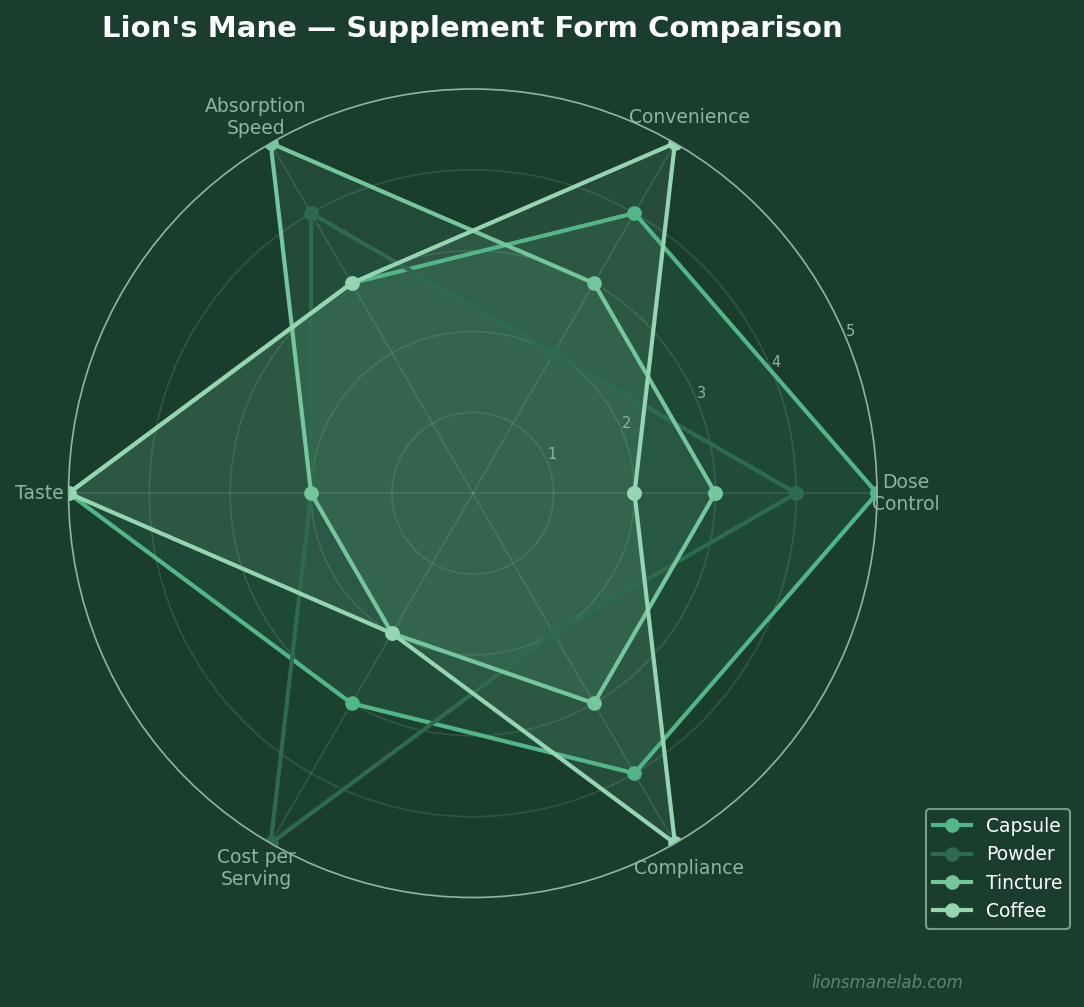
Lion’s mane comes in five main formats, and each one serves a different type of user. There is no single “best” form — only the form you will actually take every day without skipping.
Capsules
Capsules are the most popular choice for a reason. They require zero preparation, deliver a consistent dose, and travel easily. Most quality capsules contain 500mg per unit, so hitting a daily target of 1,000mg to 2,000mg means two to four capsules. Real Mushrooms offers one of the most well-regarded options, using 100% fruiting body with verified beta-glucan content above 25%. [AFFILIATE LINK PLACEHOLDER: REAL MUSHROOMS]
Powder
Bulk powder gives you dose flexibility and works well stirred into smoothies, oatmeal, coffee, or tea. The tradeoff is taste — lion’s mane powder has an earthy, mildly bitter flavor that not everyone enjoys. Powder also requires careful scoop measuring to keep your dose consistent.
Tincture (Dual-Extract)
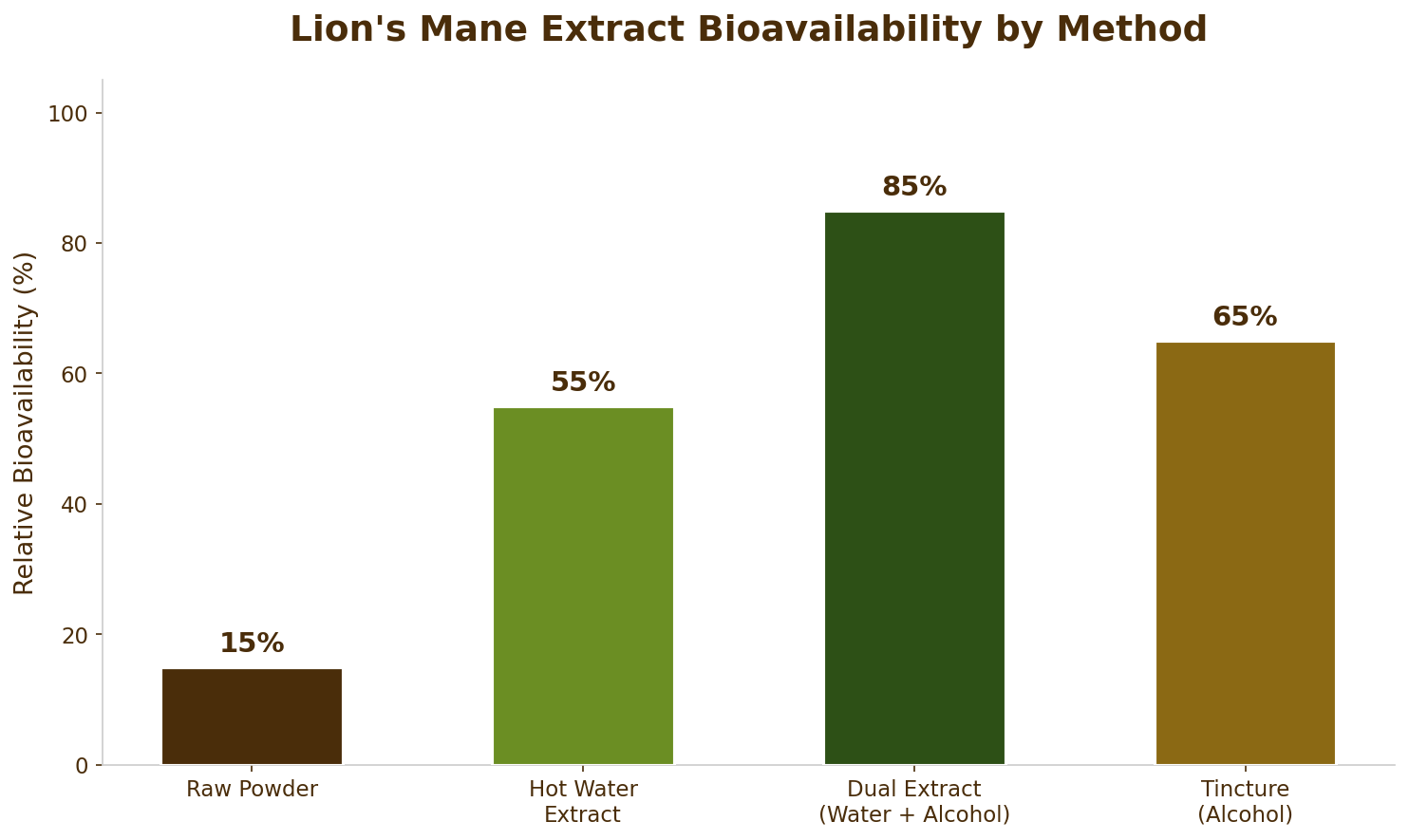
A dual-extract tincture uses both hot water and alcohol extraction to capture the broadest spectrum of bioactive compounds — hericenones from the fruiting body and erinacines from the mycelium. Tinctures absorb quickly when taken sublingually (under the tongue) and are a strong choice for maximum compound diversity. The downside: they cost more per serving and the alcohol base has a sharp taste.
Coffee Blends
Mushroom coffee blends combine lion’s mane with regular or half-caf coffee, making supplementation feel like a normal part of your morning. Brands like Four Sigmatic have popularized this format. [AFFILIATE LINK PLACEHOLDER: FOUR SIGMATIC] The caveat: coffee blends typically contain lower doses than dedicated capsules or powder, so they work better as a compliance tool than a high-dose vehicle. For more on this format, see our breakdown of lion’s mane coffee blends.
Gummies
Gummies appeal to anyone who dislikes swallowing pills, but they almost always contain lower doses per unit and often include added sugars or fillers. If a gummy delivers less than 500mg of actual extract per serving, you may need four or more daily to reach an effective range — which erodes any cost advantage quickly.
When to Take Lion’s Mane: Timing, Food, and Daily Rhythm
Get Our Free Mushroom Supplement Guide
Lab-tested brands, dosage protocols, and quality markers — delivered free.
No spam. Unsubscribe anytime.
Lion’s mane is not a stimulant. It will not keep you awake at night or give you jitters in the morning. That said, timing your dose thoughtfully can support the outcomes you are after.
For cognitive support, take lion’s mane in the morning or early afternoon. This aligns supplementation with the hours when you need mental performance most. Most users who report improvements in focus and clarity take their dose during the first half of the day.
With or without food — your stomach decides. Some people experience mild digestive discomfort when taking lion’s mane on an empty stomach. If that happens, take it with a meal or snack. There is no evidence that food meaningfully reduces absorption.
Split or single dose — both work. Some users take their full daily amount at once; others split it between breakfast and lunch. Research does not favor one approach, so choose whichever pattern you are more likely to sustain. Consistency beats optimization every time.
What to Expect: A Realistic Week-by-Week Timeline
Managing expectations is the most important factor in whether a new user stays the course long enough to experience results. Here is what the available research and user experience suggest.
Week 1: Baseline
Do not expect to feel anything dramatic. Your body is beginning to process the bioactive compounds, but NGF-related changes happen at the cellular level and take time to manifest as noticeable cognitive shifts. Some users report subtle improvements in sleep quality or a slight reduction in mental fog during the first week, but many feel nothing yet. This is normal. It does not mean the supplement is not working.
Weeks 2-3: Early Signals
This is the window where most people begin to notice something. Common early reports include slightly sharper recall, improved ability to sustain focus during longer tasks, a general sense of mental clarity, or reduced “afternoon brain fade.” These changes are often subtle enough that you might not notice them unless you are paying attention. Some users find it helpful to journal briefly each day or use a simple focus rating to track shifts they might otherwise dismiss.
Weeks 4-8: Cumulative Effects
With consistent daily use, the benefits tend to become more apparent and reliable during this window. Research on lion’s mane supplementation in older adults with mild cognitive impairment showed measurable improvements in cognitive function scores after several weeks of daily use. Individual results vary, but this is typically the phase where users move from “I think something might be different” to “I notice a real difference in how I think and work.” If you want more detail on the science behind these timelines, our dosage guide breaks down what the available studies used.
Beyond 8 Weeks: Long-Term Use
Lion’s mane appears to be safe for ongoing daily use based on available research and traditional use history in East Asian medicine. Many dedicated users supplement continuously for months or years. The key insight is that benefits are maintained through continued use — they do not necessarily persist if you stop taking it, since NGF stimulation requires ongoing input. Think of it less like a one-time fix and more like a daily practice, similar to exercise for physical fitness.
Dosage: How Much Lion’s Mane Should You Actually Take?
There is no universally agreed-upon clinical dosage for lion’s mane, and no FDA-established standard exists. That said, the range most commonly used in research and recommended by reputable supplement brands falls between 500mg and 3,000mg per day.
- 500mg-1,000mg/day: A reasonable starting point for new users. Low enough to assess tolerance, high enough to be within the range where studies have observed effects.
- 1,000mg-2,000mg/day: The sweet spot for most daily users seeking cognitive support. This is the range most quality brands formulate their serving sizes around.
- 2,000mg-3,000mg/day: The higher end of the spectrum, sometimes used by experienced supplement users or those following protocols based on specific research. Not necessarily “better” — more is not always more with adaptogenic compounds.
A critical note on extract concentration: Not all milligrams are equal. A 500mg capsule of concentrated fruiting body extract with verified beta-glucan content delivers far more active compounds than 500mg of raw mycelium biomass grown on grain. The grain substrate dilutes the active mushroom compounds, meaning you could take 2,000mg of a low-quality mycelium-on-grain product and receive fewer bioactive compounds than someone taking 500mg of a properly extracted fruiting body supplement. For a deeper comparison, read our guide on fruiting body versus mycelium to understand what actually makes it into the capsule.
Start at the lower end. Stay there for two weeks. If you tolerate it well and want to explore whether a higher dose produces different results, increase gradually. Consistency at a moderate dose will outperform sporadic use at a high dose every time.
Five Common Mistakes That Sabotage Results
After reviewing hundreds of user reports and the available literature, the same errors show up repeatedly among people who conclude lion’s mane “did nothing.” Avoid these and you dramatically increase your chances of a positive experience.
- Quitting before week four. This is the most frequent mistake by far. Lion’s mane works through gradual, cumulative biological mechanisms — primarily NGF stimulation and downstream neuronal support. If you stop at day ten because you do not feel a lightning bolt of clarity, you never gave the compound a fair chance. Commit to at least 30 consecutive days before evaluating.
- Buying mycelium-on-grain without knowing it. Many budget lion’s mane products use mycelium grown on rice or oat grain and then grind the entire substrate — mycelium plus grain — into the capsule. The result is a product that is mostly starch. Look for “100% fruiting body” or “dual extract” on the label. If the label says “mycelium biomass” or lists rice flour as an ingredient, that is a red flag. Our supplement comparison guide ranks products based on transparency and verified active compound content.
- Skipping days or taking it “when you remember.” Irregular dosing undermines the cumulative NGF pathway that makes lion’s mane effective. Set a phone alarm, pair it with a meal you eat every day, or stack it next to your coffee maker. Build a cue into your existing routine so that taking it becomes automatic rather than a decision you make (or forget) each morning.
- Expecting stimulant-like effects. Lion’s mane is not caffeine, modafinil, or Adderall. It does not produce a noticeable “on switch” sensation. The cognitive benefits are subtle and tend to reveal themselves as an absence of problems — less fog, fewer lost trains of thought, smoother recall — rather than a presence of euphoria. If you are chasing a noticeable rush, you are looking for the wrong thing.
- Ignoring the rest of the equation. No supplement compensates for chronic sleep deprivation, severe stress, poor nutrition, or dehydration. Lion’s mane may support cognitive function, but it works best as part of a baseline of healthy habits. If you are sleeping five hours a night and running on processed food, fix those first — the ROI is higher than any capsule. For a more comprehensive approach to cognitive support, see our guide on building a functional mushroom stack.
Frequently Asked Questions
Can I take lion’s mane with coffee?
Yes. Lion’s mane pairs well with coffee, and many people take their capsules alongside their morning cup or use a pre-blended lion’s mane coffee product. There are no known negative interactions between lion’s mane and caffeine. In fact, combining the two is one of the most popular supplementation methods because coffee provides immediate alertness while lion’s mane supports longer-term cognitive function through different mechanisms. Just be aware that mushroom coffee blends typically contain a lower dose of lion’s mane than standalone supplements.
Should I cycle lion’s mane or take it every day?
Most research and expert guidance suggests continuous daily use rather than cycling on and off. Unlike stimulants, lion’s mane does not appear to cause tolerance buildup that requires periodic breaks. The NGF-stimulating effects are maintained through consistent use and may diminish when supplementation stops. Some users choose to cycle for personal preference — for example, five days on and two days off, or eight weeks on and two weeks off — but there is limited evidence that cycling provides any advantage over uninterrupted daily use.
Are there side effects I should watch for?
Lion’s mane is generally well tolerated. The most commonly reported side effects are mild and digestive in nature: slight stomach discomfort, nausea, or bloating, particularly when taken on an empty stomach. These typically resolve by taking it with food. Allergic reactions are rare but possible, especially in individuals with known mushroom allergies. If you are on blood thinners, immunosuppressants, or any prescription medication, consult your healthcare provider before starting lion’s mane. For a thorough review of what the research shows, read our lion’s mane side effects guide.
How do I know if my lion’s mane supplement is high quality?
Look for three things on the label: the words “fruiting body” (not “mycelium biomass”), a stated beta-glucan percentage of 25% or higher, and evidence of third-party testing such as a certificate of analysis (COA). Avoid products that use proprietary blends, list grain or rice flour as a primary ingredient, or make disease-treatment claims on the packaging. Reputable brands like Real Mushrooms publish their COAs and clearly disclose their beta-glucan content. [AFFILIATE LINK PLACEHOLDER: REAL MUSHROOMS]
Can I take lion’s mane at night before bed?
You can. Lion’s mane is not a stimulant and does not contain caffeine or any compound known to disrupt sleep. Some users actually report improved sleep quality when supplementing with lion’s mane, though this is anecdotal and not well-studied. If your primary goal is cognitive performance during working hours, morning dosing makes more intuitive sense. But if evening is the only time you will consistently remember to take it, that is far better than skipping days. Consistency matters more than timing.
Start Simple, Stay Consistent, and Give It Time
The best way to take lion’s mane is the way you will actually take it every single day. Choose a form that fits your routine — capsules if you want simplicity, powder if you are already blending morning shakes, a dual-extract tincture if you want the broadest compound profile, or a coffee blend if compliance is your biggest challenge. Start with 500mg to 1,000mg daily. Take it in the morning or early afternoon, with food if your stomach is sensitive. Then do the hardest part: keep going for at least four weeks before you evaluate whether it is working.
Lion’s mane rewards patience. Its benefits are real but gradual, building quietly through biological pathways that do not announce themselves with fanfare. The people who get the most from this supplement are not the ones who found the perfect dose on day one — they are the ones who showed up consistently, day after day, and gave the compound time to do its work. Individual results vary, and it is always wise to consult your healthcare provider before adding any new supplement to your routine, but for many people, lion’s mane becomes a foundational part of how they support their cognitive health long term.
References
- Mori K, et al. “Improving effects of the mushroom Yamabushitake (Hericium erinaceus) on mild cognitive impairment: a double-blind placebo-controlled clinical trial.” Phytotherapy Research, 2009.
- Nagano M, et al. “Reduction of depression and anxiety by 4 weeks Hericium erinaceus intake.” Biomedical Research, 2010.
- Lion’s Mane Dosage and Usage — Examine.com Research Summary
- Memorial Sloan Kettering Cancer Center: Lion’s Mane Mushroom