What Is Brain Fog, Really?
If you’ve ever sat at your desk staring at a screen, unable to string together a coherent thought, you already know what brain fog feels like. It’s that frustrating mental haze — the inability to concentrate, sluggish recall, and a persistent sense that your brain is running at half speed.
In This Article
- What Is Brain Fog, Really?
- The Science Behind Lion’s Mane and Cognitive Function
- What Lion’s Mane Is Not: Setting Honest Expectations
- Realistic Timeline: What to Expect Week by Week
- Week 1-2: Minimal Noticeable Change
- Week 2-3: Mild Clarity Emerging
- Week 3-4: Noticeable Effects
- Week 4-8: Gradual Continued Improvement
- Choosing the Right Lion’s Mane Supplement for Brain Fog
- Fruiting Body vs. Mycelium
- What to Look For on the Label
- Complementary Strategies: What Else Helps Brain Fog
- Frequently Asked Questions
- Can lion’s mane clear brain fog completely?
- How much lion’s mane should I take for brain fog?
- Are there any side effects of taking lion’s mane daily?
- Is lion’s mane better than caffeine for focus?
- How long should I take lion’s mane before deciding if it works?
- The Bottom Line
- References
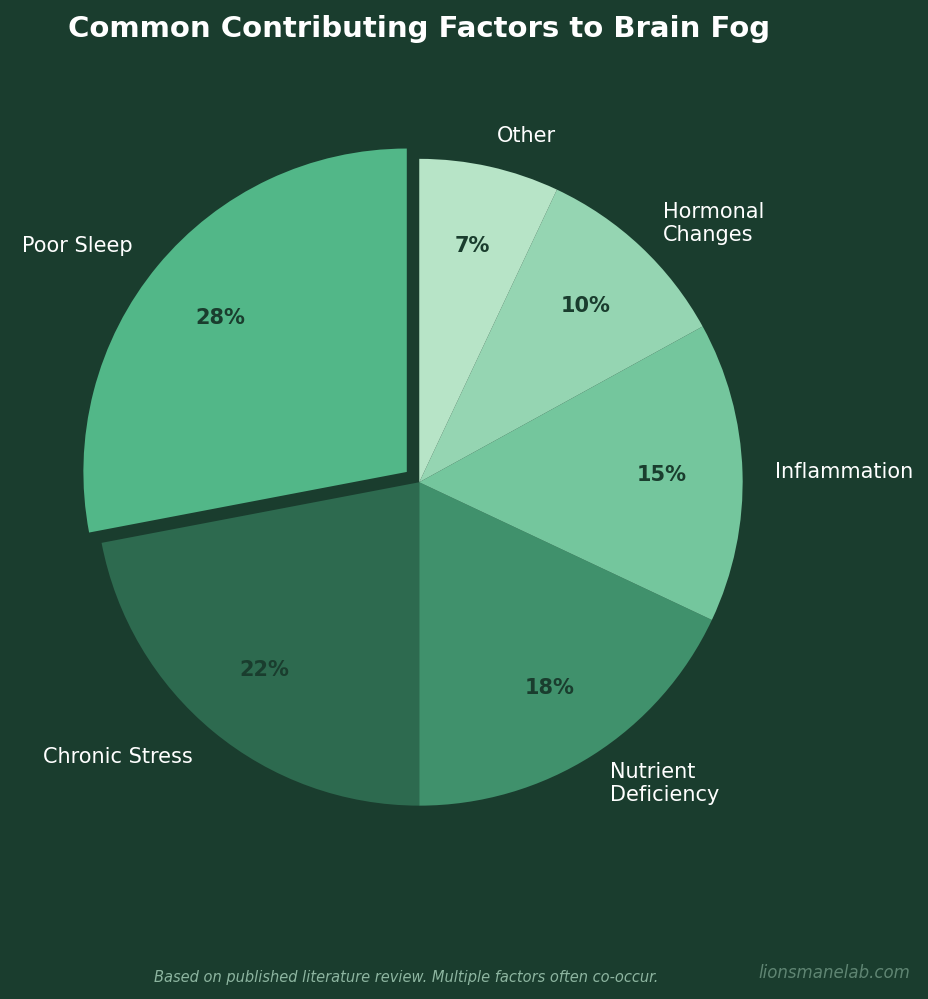
Brain fog isn’t a medical diagnosis in itself. It’s a collection of symptoms that knowledge workers and busy professionals describe when their cognitive performance drops. Common triggers include chronic stress, poor sleep, systemic inflammation, and nutritional deficiencies. It shows up as difficulty focusing during deep work, forgetting words mid-sentence, or needing to re-read the same paragraph three times.
Related: Lion’S Mane And Adhd
The frustrating part? Standard bloodwork often comes back normal. This is precisely the gap that has driven many people toward functional mushrooms — and lion’s mane (Hericium erinaceus) in particular — as a potential natural approach to reclaiming mental clarity.
But does lion’s mane actually help with brain fog, or is this just another overhyped supplement story? Let’s look at what the research actually says.
The Science Behind Lion’s Mane and Cognitive Function
Lion’s mane mushroom has been used in traditional Chinese and Japanese medicine for centuries, but modern interest centers on two families of bioactive compounds: hericenones and erinacines.
Hericenones are found primarily in the fruiting body, while erinacines are concentrated in the mycelium. Both have demonstrated the ability to stimulate Nerve Growth Factor (NGF) production in laboratory studies. NGF is a protein essential for the growth, maintenance, and survival of neurons — the cells responsible for thinking, memory, and focus.
Here’s why that matters for brain fog: NGF plays a critical role in neuroplasticity, your brain’s ability to form new connections and adapt. When NGF levels are adequate, neurons communicate more efficiently. When they’re low, cognitive performance may suffer.
Research suggests that lion’s mane may support cognitive function through several pathways:
- NGF stimulation — Hericenones and erinacines may promote the synthesis of NGF, supporting neuron health and communication
- Anti-inflammatory effects — Beta-glucans in lion’s mane possess immune-modulating properties that may help reduce systemic inflammation, a known contributor to brain fog
- Antioxidant activity — Lion’s mane contains compounds that may help protect neurons from oxidative stress
- Myelin support — Some preclinical studies suggest erinacines may support myelination, the insulating sheath around nerve fibers that affects signal transmission speed
A frequently cited 2009 Japanese study published in Phytotherapy Research found that older adults with mild cognitive impairment who took lion’s mane for 16 weeks showed improved cognitive function scores compared to a placebo group. When supplementation stopped, scores declined again — suggesting the benefits required ongoing use.
It’s important to note that most mechanistic research has been conducted in animal models and cell cultures. Human clinical trials are growing but remain limited. The evidence is promising, but we’re far from the kind of large-scale human data that would let us make definitive claims. For a deeper dive into the neuroscience, see our guide on lion’s mane and neurogenesis.
What Lion’s Mane Is Not: Setting Honest Expectations
Get Our Free Mushroom Supplement Guide
Lab-tested brands, dosage protocols, and quality markers — delivered free.
No spam. Unsubscribe anytime.
Before going any further, let’s address something directly: lion’s mane is not a stimulant.
If you’re expecting the sharp, immediate focus you get from caffeine or a prescription stimulant, lion’s mane will disappoint you. It doesn’t work by flooding your brain with dopamine or blocking adenosine receptors. There’s no jolt, no buzz, and no crash.
Instead, lion’s mane appears to work gradually by supporting the underlying biological infrastructure of your brain. Think of it less like flipping a light switch and more like slowly upgrading the wiring in your house. The lights get brighter over time, but you might not notice the change on any single day.
This distinction matters because many people try lion’s mane for a few days, feel nothing dramatic, and conclude it doesn’t work. The mechanism of action — NGF stimulation and gradual neuronal support — requires consistent daily use over weeks before most people notice meaningful changes.
It’s also worth stating clearly: lion’s mane is not a replacement for addressing root causes. If your brain fog stems from untreated sleep apnea, chronic dehydration, or an underlying medical condition, no supplement will substitute for proper care. Always consult a qualified healthcare provider if your brain fog is severe or persistent.
Realistic Timeline: What to Expect Week by Week
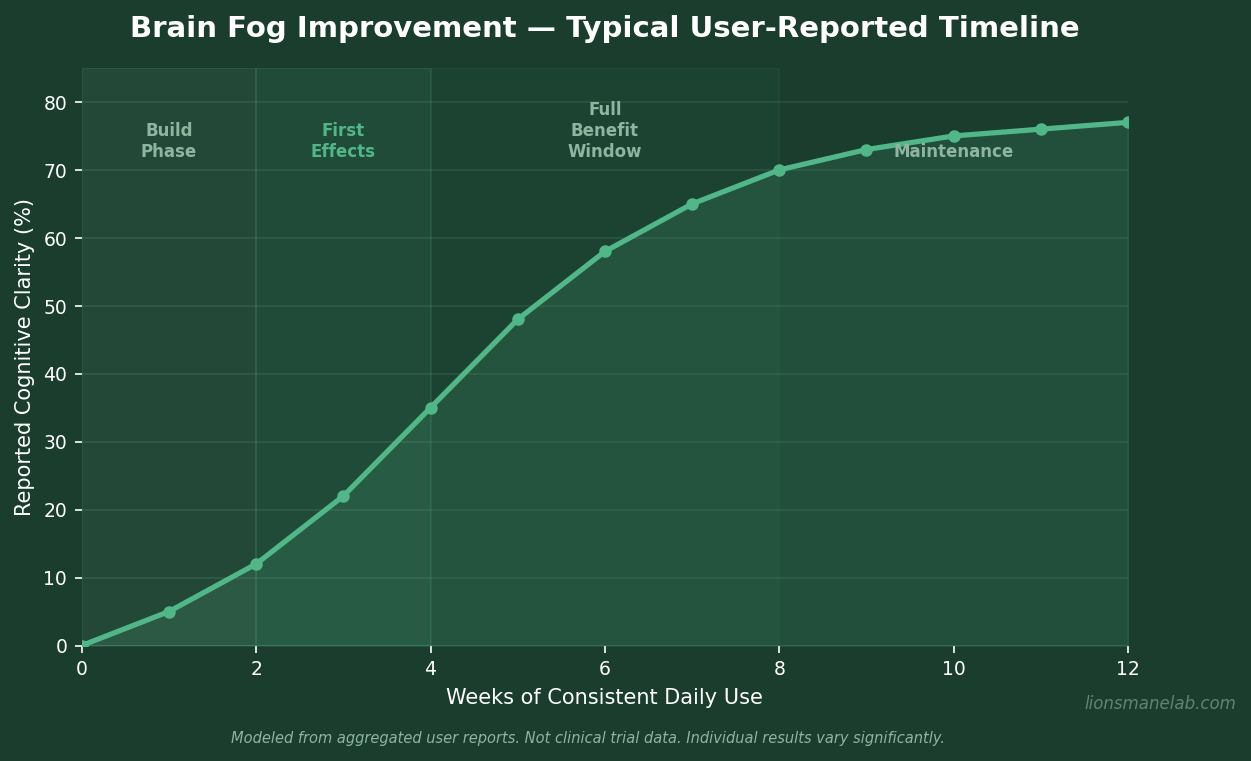
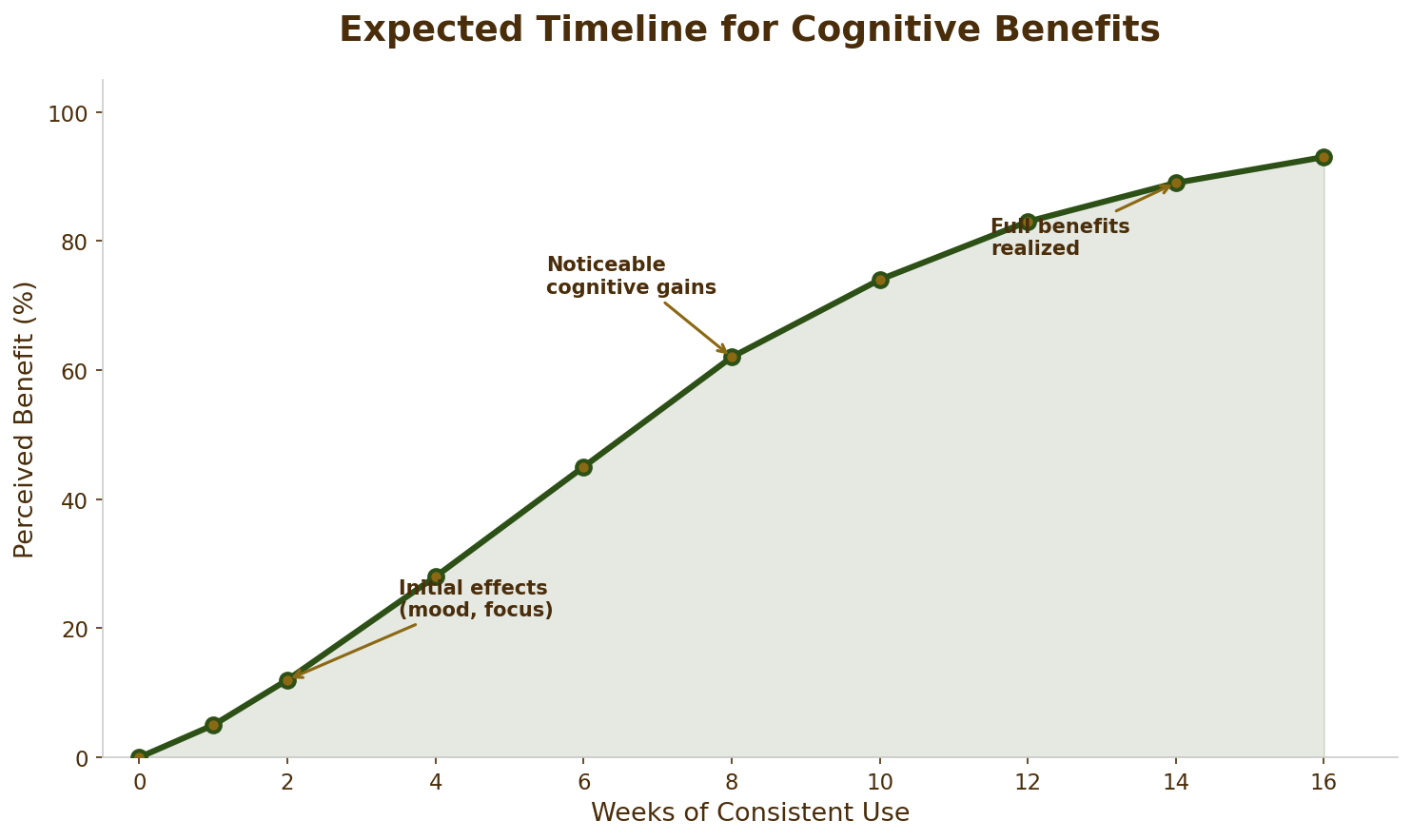
One of the most common questions about lion’s mane is “how long until it works?” Based on available research and widely reported user experiences, here’s a realistic timeline when taking a consistent daily dose of around 1,000mg of a quality extract:
Week 1-2: Minimal Noticeable Change
Most people report little to no perceptible difference during this phase. This is normal. The bioactive compounds are beginning to influence NGF pathways, but the effects haven’t accumulated enough to cross the threshold of awareness. This is where patience matters most — and where many people unfortunately give up too early.
Week 2-3: Mild Clarity Emerging
Around the two to three week mark, some users begin to notice subtle improvements. Common early signs include slightly easier word recall, less mental fatigue during afternoon work sessions, or a general sense that the “fog” is beginning to thin. These changes are often subtle enough that you might attribute them to a good night’s sleep rather than the supplement.
Week 3-4: Noticeable Effects
By the third to fourth week of consistent use, many users report more clearly perceptible benefits. Focus during demanding cognitive tasks may feel more sustained. The experience of “losing your train of thought” may become less frequent. Some people describe it as feeling like their thinking has become “cleaner” — not faster, but less cluttered.
Week 4-8: Gradual Continued Improvement
Benefits may continue to build over weeks four through eight. This aligns with the timeframe seen in the limited clinical research available. The 2009 Japanese study measured outcomes at 8 and 16 weeks, finding progressive improvement. Individual results vary significantly, and some people may plateau earlier or later than others.
For detailed guidance on how much to take and when, check out our lion’s mane dosage guide. And for a broader look at what this mushroom can do, see our overview of lion’s mane mushroom benefits.
Choosing the Right Lion’s Mane Supplement for Brain Fog
Not all lion’s mane products are created equal, and the form you choose can significantly impact whether you experience cognitive benefits. Here are the key factors to consider:
Fruiting Body vs. Mycelium
Fruiting body extracts tend to be more standardized and transparent about active compound content — particularly beta-glucan percentages. Mycelium products vary more widely in quality, and some are grown on grain substrates that dilute active compounds with starch filler.
For cognitive support, look for 100% fruiting body extract or clearly labeled dual-extracts that include both hericenones and erinacines. We break this down in our fruiting body vs. mycelium comparison.
What to Look For on the Label
- Beta-glucan content stated — a good quality marker; look for products reporting 25% or higher
- Third-party tested — with Certificates of Analysis (COA) available on request
- Extract designation — “extract” is different from “powder” or “biomass”; extracts concentrate the active compounds
- No proprietary blends — you should be able to see exactly how much lion’s mane you’re getting per serving
- cGMP certified facility — ensures consistent manufacturing standards
For an accessible daily format, Four Sigmatic’s mushroom coffee blends combine lion’s mane with coffee, making it easy to build supplementation into your morning routine. The trade-off is lower doses than standalone capsules, so they work best as a consistency tool rather than a high-dose approach. Check current Four Sigmatic pricing here.
For a dedicated capsule, Real Mushrooms offers a 100% fruiting body extract that’s third-party tested with verified beta-glucan content. See the latest Real Mushrooms options here.
For a comprehensive breakdown of the top products, visit our best lion’s mane supplement guide.
Complementary Strategies: What Else Helps Brain Fog
Lion’s mane may support cognitive function, but it works best as part of a broader approach to brain health. If brain fog is a persistent issue, these evidence-based strategies can complement your supplementation:
- Sleep optimization — Aim for 7-9 hours of quality sleep. Poor sleep is the single most common driver of brain fog. No supplement will override chronic sleep deprivation.
- Stress management — Chronic cortisol elevation impairs memory and executive function. Meditation, exercise, or structured breathing can help regulate your stress response.
- Anti-inflammatory nutrition — A diet rich in omega-3 fatty acids, leafy greens, and polyphenol-rich foods may reduce neuroinflammation over time.
- Hydration — Even mild dehydration (1-2% of body weight) impairs cognitive performance. Simple, but often overlooked.
- Movement — Regular aerobic exercise increases BDNF (brain-derived neurotrophic factor), which works alongside NGF to support brain health.
Some people also combine lion’s mane with other functional mushrooms or nootropics. Cordyceps may support energy and oxygen utilization, while rhodiola rosea can help address the stress component of brain fog. Our functional mushroom stack guide covers compatible pairings and what to watch out for.
Frequently Asked Questions
Can lion’s mane clear brain fog completely?
Research suggests lion’s mane may help reduce symptoms associated with brain fog, but it’s unlikely to be a complete solution on its own. Brain fog typically has multiple causes — stress, sleep quality, inflammation, diet — and lion’s mane may support the neurological side by promoting NGF production. Addressing root causes alongside supplementation will produce the best results. Individual results vary.
How much lion’s mane should I take for brain fog?
A commonly recommended dose for cognitive support is around 1,000mg per day of a quality extract. Some people take up to 2,000-3,000mg daily, though no universal clinical standard exists. Starting at 500mg and gradually increasing allows you to assess tolerance. See our complete dosage guide for details.
Are there any side effects of taking lion’s mane daily?
Lion’s mane is generally well-tolerated and considered safe for most adults. Some people report mild digestive discomfort when first starting, which typically resolves within a few days. Individuals with mushroom allergies should avoid lion’s mane entirely. If you’re taking blood thinners or immunosuppressant medications, consult your healthcare provider before starting supplementation. We cover this topic in detail in our lion’s mane side effects article.
Is lion’s mane better than caffeine for focus?
They work through entirely different mechanisms. Caffeine blocks adenosine receptors, providing quick but temporary alertness — often followed by a crash. Lion’s mane is not a stimulant; it may support sustained cognitive function over time through NGF production. Many people use both: caffeine for immediate alertness and lion’s mane for longer-term support. Four Sigmatic’s mushroom coffee blends combine both in a single product.
How long should I take lion’s mane before deciding if it works?
Give it a minimum of four weeks of consistent daily use before evaluating. Some studies measured outcomes at 8 and 16 weeks, finding continued improvement. Sporadic use or quitting after a few days doesn’t give the compound enough time to influence NGF pathways. Consistency is more important than dose size.
The Bottom Line
Lion’s mane is one of the more promising natural approaches to supporting cognitive function and addressing brain fog — but it’s not a magic pill. The research on hericenones and erinacines suggests a plausible mechanism through NGF stimulation, and limited but encouraging human studies point in a positive direction.
If you’re dealing with brain fog, lion’s mane may help as part of a comprehensive approach that also addresses sleep, stress, and nutrition. It works gradually, requires patience, and delivers subtle rather than dramatic results for most people.
Start with a quality extract at around 1,000mg per day, stay consistent for at least four to eight weeks, and keep expectations grounded. Whether you choose Four Sigmatic’s mushroom coffee or a dedicated capsule like Real Mushrooms’ lion’s mane extract, the most important factor is that you actually take it every day.
For more on how to integrate lion’s mane into your daily routine, check out our guide on how to take lion’s mane.
References
- Mori K, et al. “Improving effects of the mushroom Yamabushitake (Hericium erinaceus) on mild cognitive impairment: a double-blind placebo-controlled clinical trial.” Phytotherapy Research, 2009.
- Mori K, et al. “Nerve growth factor-inducing activity of Hericium erinaceus in 1321N1 human astrocytoma cells.” Biological & Pharmaceutical Bulletin, 2008.
- Lion’s Mane — Examine.com Evidence-Based Research Summary
- Cleveland Clinic: Brain Fog — Causes, Symptoms, and Treatment