
Lion’s mane mushroom (Hericium erinaceus) has moved from traditional medicine cabinets to mainstream supplement shelves — and for good reason. Research into this distinctive white, shaggy fungus suggests it contains bioactive compounds that may support brain health, nerve function, and immune response in ways few other natural supplements can match.
In This Article
- What Is Lion’s Mane Mushroom?
- Cognitive and Brain Health Benefits
- Immune System and Anti-Inflammatory Properties
- Mood and Stress Research
- Digestive and Gut Health Research
- How to Choose a Quality Lion’s Mane Supplement
- Dosage and What to Expect
- Safety and Side Effects
- Frequently Asked Questions
- Does lion’s mane actually work for brain health?
- How long does it take for lion’s mane to work?
- Can I take lion’s mane with other supplements?
- Is lion’s mane better as capsules, powder, or coffee?
- What’s the difference between fruiting body and mycelium supplements?
- Who Should Consider Lion’s Mane?
- The Bottom Line
- References
But separating verified research from marketing hype requires careful reading. This guide covers what the science actually shows, what remains unproven, and how to evaluate lion’s mane products if you decide to try one.
What Is Lion’s Mane Mushroom?
Lion’s mane is an edible fungus native to North America, Europe, and Asia. Its scientific name is Hericium erinaceus, and it grows on hardwood trees in cascading white spines that resemble — as the name suggests — a lion’s mane.
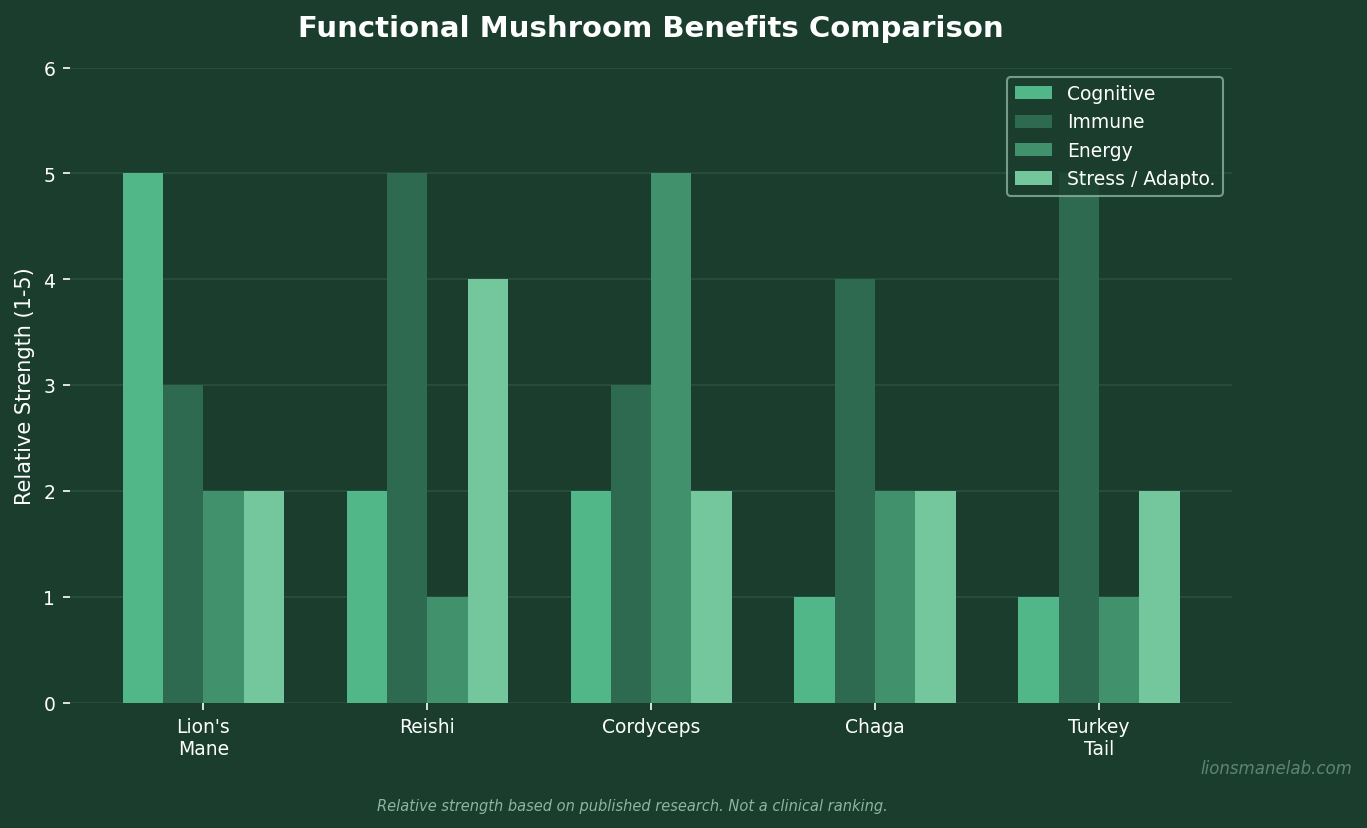
Unlike many medicinal mushrooms used primarily as immune tonics, lion’s mane has attracted particular research interest for its neurological properties. The mushroom contains two families of compounds not commonly found in other fungi: hericenones (found in the fruiting body) and erinacines (found in the mycelium).
Both compound families have demonstrated the ability to stimulate Nerve Growth Factor (NGF) synthesis in laboratory studies — a protein critical for the growth, maintenance, and survival of neurons. This NGF connection is the foundation of most cognitive benefit claims, though it’s important to note that much of this research remains preclinical.
Related: Lion’S Mane And Adhd
Cognitive and Brain Health Benefits
The most widely discussed benefit of lion’s mane is its potential effect on cognitive function. Here’s what the research landscape looks like:
NGF stimulation: Multiple laboratory studies have confirmed that hericenones and erinacines can stimulate NGF production in cell cultures. NGF plays a role in neuroplasticity — the brain’s ability to form and reorganize neural connections. Research suggests this mechanism may support memory, learning, and overall cognitive function.
Brain fog and mental clarity: Some users report improved mental clarity after 2-4 weeks of consistent supplementation. While controlled clinical trials in this specific area are limited, the available evidence from smaller studies and user reports suggests lion’s mane may help with brain fog when taken consistently over time.
Neuroprotective properties: Preclinical research indicates lion’s mane extracts may have neuroprotective effects, potentially supporting the health of existing neurons while encouraging new neural growth. This area of research — sometimes referred to as neurogenesis — is still developing but represents one of the most promising aspects of lion’s mane science.
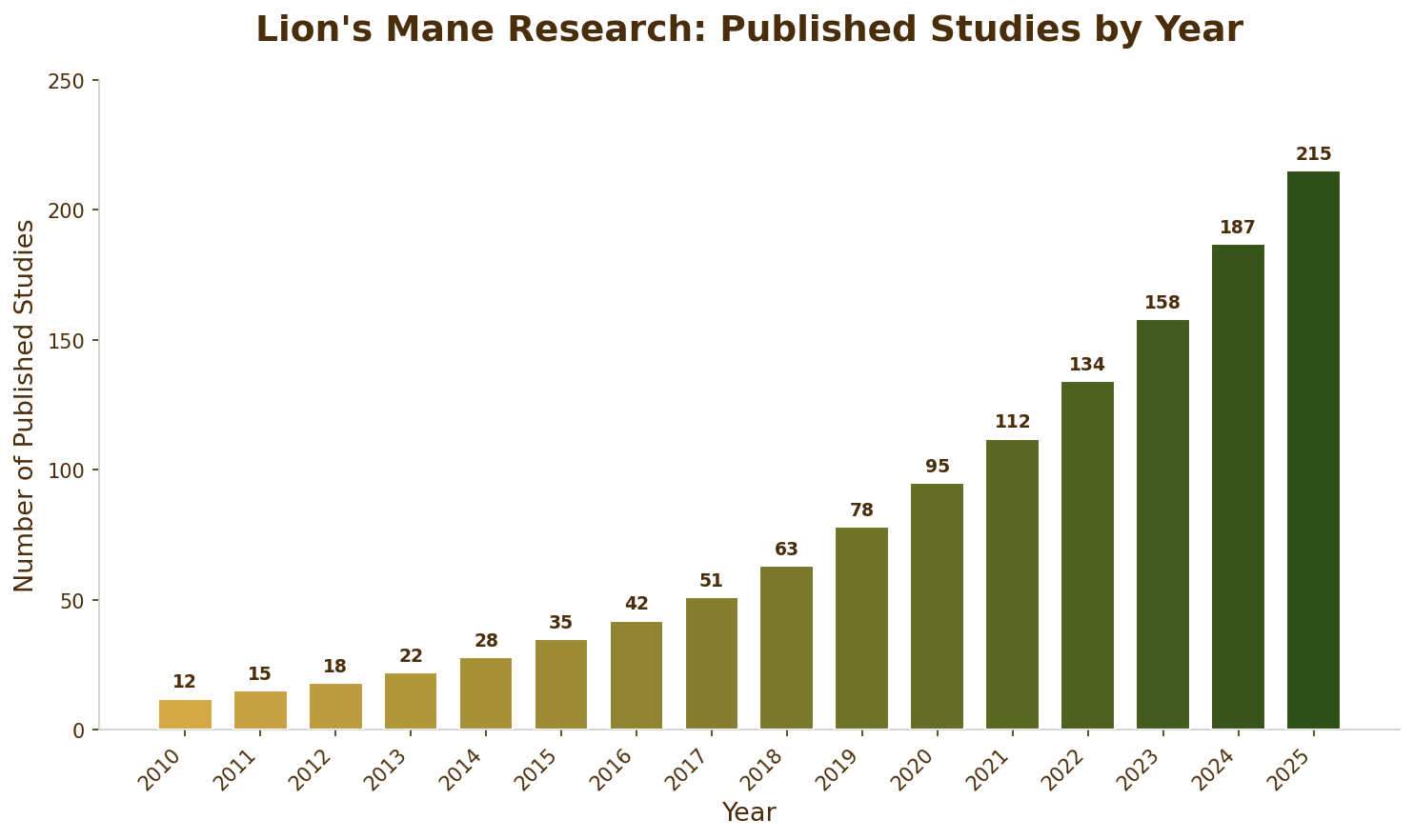
Important context: Human clinical trials remain limited. Most of the robust evidence comes from animal models and in vitro studies. The results are encouraging, but describing lion’s mane as “proven” for any specific cognitive condition would be inaccurate based on current evidence.
Immune System and Anti-Inflammatory Properties
Get Our Free Mushroom Supplement Guide
Lab-tested brands, dosage protocols, and quality markers — delivered free.
No spam. Unsubscribe anytime.
Beyond brain health, lion’s mane contains beta-glucans — polysaccharides found in many medicinal mushrooms that research suggests may support immune function.
Beta-glucan content varies significantly between products. Fruiting body extracts generally provide more standardizable beta-glucan content than mycelium-on-grain products, where grain starch can dilute the active compounds.
Some studies indicate lion’s mane may also possess anti-inflammatory properties, though the clinical significance of these findings in humans requires further research. The immune-supporting and anti-inflammatory properties are considered complementary to — not the primary reason for — most people’s interest in lion’s mane supplementation.
Mood and Stress Research
Beyond cognitive performance, a growing body of research is investigating lion’s mane for mood-related outcomes. A 2010 study by Nagano et al. found that women who consumed lion’s mane cookies for four weeks reported lower scores on measures of irritability and anxiety compared to placebo — one of the few randomized, controlled human trials in this area.
The proposed mechanism connects back to NGF. Nerve growth factor doesn’t just support cognitive neurons — it also plays a role in the health of neurons involved in emotional regulation. Some researchers theorize that lion’s mane’s NGF-stimulating properties may indirectly support mood stability through improved neural health in emotion-processing brain regions.
For individuals experiencing stress-related cognitive decline — where anxiety or low mood compounds brain fog — lion’s mane may offer a dual benefit by addressing both the cognitive and emotional dimensions. However, lion’s mane is not a substitute for professional mental health treatment. If you’re experiencing persistent mood difficulties, consult your healthcare provider. For a deeper look at this research, see our reviews of the anxiety and depression evidence.
Digestive and Gut Health Research
An emerging area of lion’s mane research involves its potential effects on digestive health. Some preclinical studies suggest the mushroom may support the gut lining and promote healthy gut bacteria populations.
Related: Lion’S Mane And Gut Health
The gut-brain axis — the bidirectional communication system between the digestive system and the brain — means that gut health improvements could theoretically contribute to cognitive benefits as well. However, this connection in the context of lion’s mane supplementation specifically is not yet well-established in human clinical research.
Preclinical studies have identified several mechanisms through which lion’s mane may support digestive health. The mushroom’s polysaccharides appear to have prebiotic properties, potentially encouraging the growth of beneficial gut bacteria. Separately, some animal research suggests lion’s mane extracts may support the integrity of the gastric mucosal lining — the protective barrier in the stomach and intestines.
These findings are preliminary, and human clinical trials specifically examining lion’s mane for digestive outcomes are still needed. However, the connection between gut health, immune function, and cognitive performance makes this one of the more promising areas of future lion’s mane research. For a comprehensive review, see our gut health research guide.
How to Choose a Quality Lion’s Mane Supplement
Not all lion’s mane supplements deliver the same active compound profile. The differences between products can be substantial. Here’s what to look for:
- Fruiting body vs. mycelium: Fruiting body extracts contain hericenones and tend to have more standardizable beta-glucan content. Mycelium products may contain erinacines but are often grown on grain, which can dilute potency. Look for products that specify “fruiting body” or “mycelium extract” — not “mycelium biomass.” Our supplement rankings break this down in detail.
- Beta-glucan content: Look for products that disclose beta-glucan percentages on the label. Quality products typically contain 25% or higher. Some brands don’t disclose this information, which makes independent quality assessment difficult.
- Third-party testing: Reputable brands provide Certificates of Analysis (COAs) showing what’s actually in the product. This is the gold standard for supplement transparency.
- Extraction method: Dual-extraction (hot water + alcohol) captures both water-soluble and alcohol-soluble compounds, providing the broadest spectrum of active ingredients.
[AFFILIATE LINK PLACEHOLDER: REAL MUSHROOMS] — Our top-rated pick uses 100% fruiting body with verified >25% beta-glucan content and per-batch COAs.
Dosage and What to Expect
There is no universally established clinical dosage for lion’s mane. Based on available research and product formulations, typical daily doses range from 500mg to 3,000mg, depending on the extract concentration and your goals.
- General wellness: 500mg per day
- Cognitive support: 1,000mg per day
- Research-level protocols: 2,000-3,000mg per day
Timing considerations: Research hasn’t established a definitive optimal time of day for lion’s mane supplementation. Some users prefer morning dosing to support daytime cognitive performance, while others take it in the evening — some preliminary research suggests it may support sleep quality rather than interfere with it. Splitting the dose between morning and evening is another common approach. For form-specific guidance on capsules, powders, tinctures, and gummies, see our complete guide to taking lion’s mane.
Most users report that noticeable effects take 2-4 weeks of consistent daily use. Lion’s mane is not a stimulant — you won’t feel an acute effect like caffeine. The benefits appear to build gradually through cumulative mechanisms related to NGF and neuroplasticity.
For detailed timing and form-specific guidance, see our complete dosage guide.
Safety and Side Effects
Lion’s mane is generally recognized as safe (GRAS) and well-tolerated in the available research. Rare allergic reactions have been reported, primarily in individuals with known mushroom allergies.
If you take blood thinners or immunosuppressants, consult your healthcare provider before starting lion’s mane. Some research suggests it may have mild antiplatelet and immune-modulating properties.
For a thorough review of safety considerations, see our side effects and safety guide.
Frequently Asked Questions
Does lion’s mane actually work for brain health?
Laboratory research consistently shows that lion’s mane compounds stimulate NGF production, which plays a role in brain health and neuroplasticity. Human clinical evidence is growing but still limited. Many users report subjective improvements in mental clarity after 2-4 weeks of consistent use. Individual results vary significantly.
How long does it take for lion’s mane to work?
Most users in available studies and user reports notice initial effects within 2-4 weeks of daily use. Some research protocols extend to 8-16 weeks. Consistency matters more than dose — daily use appears to be more important than taking large amounts sporadically.
Can I take lion’s mane with other supplements?
Lion’s mane is commonly stacked with other nootropics and functional mushrooms. Popular combinations include Alpha-GPC (for choline support), Bacopa Monnieri (for memory consolidation), and Cordyceps (for energy). See our functional mushroom stack guide for detailed combination protocols.
Is lion’s mane better as capsules, powder, or coffee?
Each form has trade-offs. Capsules offer precise dosing and convenience. Powder allows flexible dosing and can be added to foods. Mushroom coffee blends offer lower doses but higher daily compliance for coffee drinkers. The best form is whichever you’ll actually take consistently.
What’s the difference between fruiting body and mycelium supplements?
Fruiting body extracts contain hericenones and standardizable beta-glucan content. Mycelium products contain erinacines but are often diluted by grain substrate. Quality varies dramatically between products — our detailed comparison explains what to look for on the label.
Who Should Consider Lion’s Mane?
Based on the available research and typical user profiles, lion’s mane supplementation may be worth exploring for several groups:
- Knowledge workers and students: Those seeking sustained cognitive support for demanding mental tasks. Unlike stimulants, lion’s mane works through gradual mechanisms — it won’t replace your morning coffee, but it may support the neural infrastructure that caffeine relies on. Some users combine both through mushroom coffee products.
- Adults 40+ concerned about cognitive aging: The NGF-stimulating properties are particularly relevant as natural NGF production declines with age. The Mori et al. study specifically demonstrated cognitive improvements in older adults with mild cognitive impairment.
- Biohackers building nootropic stacks: Lion’s mane pairs well with other cognitive compounds. Common stacks include lion’s mane with ashwagandha for stress-cognition support, or with cordyceps and chaga in a comprehensive mushroom stack.
- Anyone exploring alternatives to synthetic nootropics: Our comparison with Alpha Brain illustrates how lion’s mane offers a fundamentally different approach — supporting the brain’s own growth factors rather than temporarily modulating neurotransmitters.
Lion’s mane is not appropriate for individuals with known mushroom allergies, and those on blood thinners or immunosuppressants should consult their healthcare provider first. For a full breakdown of which brands deliver research-grade quality, see our Real Mushrooms review and extract guide.
The Bottom Line
Lion’s mane mushroom represents one of the more promising natural approaches to cognitive support, backed by a growing — if still developing — body of research. The key compounds (hericenones and erinacines) have demonstrated real biological activity related to nerve growth factor stimulation, and the safety profile is strong.
The most important factor in getting results is product quality. A lion’s mane supplement with verified beta-glucan content, proper extraction, and third-party testing will deliver a meaningfully different experience than a budget product with undisclosed ingredients.
Start with a quality product, give it 2-4 weeks of consistent daily use, and track your own cognitive markers. Consult your healthcare provider before starting any new supplement regimen.
References
- Mori K, et al. “Nerve growth factor-inducing activity of Hericium erinaceus in 1321N1 human astrocytoma cells.” Biological & Pharmaceutical Bulletin, 2008.
- Friedman M. “Chemistry, Nutrition, and Health-Promoting Properties of Hericium erinaceus (Lion’s Mane) Mushroom Fruiting Bodies and Mycelia and Their Bioactive Compounds.” Journal of Agricultural and Food Chemistry, 2015.
- Lion’s Mane — Examine.com Evidence-Based Research Summary
- Memorial Sloan Kettering Cancer Center: Lion’s Mane Mushroom