What Is Neurogenesis and Why Should You Care?
Your brain is not a fixed organ. For decades, neuroscience assumed adults could not grow new neurons — that the brain you had at twenty was the brain you were stuck with. That assumption has been overturned. The process of generating new neurons from neural stem cells is called neurogenesis, and it continues throughout adult life, primarily in the hippocampus, the brain region most closely associated with learning and memory.
In This Article
- What Is Neurogenesis and Why Should You Care?
- Nerve Growth Factor: The Molecular Key to Neuron Survival
- Hericenones and Erinacines: Two Pathways to NGF Stimulation
- Hericenones (Fruiting Body)
- Erinacines (Mycelium)
- What the Research Actually Shows
- Preclinical Evidence (Strong)
- Human Evidence (Limited but Growing)
- Why NGF Matters Beyond Memory
- Choosing a Supplement That Matches the Science
- Frequently Asked Questions
- Does lion’s mane directly cause neurogenesis in humans?
- How long does it take for lion’s mane to affect NGF levels?
- Is fruiting body or mycelium better for neurogenesis?
- Can you take lion’s mane with other nootropics for enhanced neurogenesis?
- What are the risks or side effects of using lion’s mane for cognitive support?
- Conclusion: A Promising Frontier, Not a Finished Story
- References
Neurogenesis underpins neuroplasticity — the brain’s ability to form, reorganize, and strengthen neural connections in response to experience. Without new neurons integrating into existing circuits, the brain’s capacity to adapt and recover diminishes over time. Age-related cognitive decline is not simply neurons dying; it is also fewer new neurons being born.
This is where lion’s mane mushroom (Hericium erinaceus) enters the conversation. Among functional mushrooms studied for cognitive effects, lion’s mane stands alone in its ability to influence a molecular pathway critical to neurogenesis: the Nerve Growth Factor pathway. The research is not yet settled science, but what has emerged from preclinical and early human studies is compelling enough to warrant serious attention.
Nerve Growth Factor: The Molecular Key to Neuron Survival
Nerve Growth Factor (NGF) is a protein in the neurotrophin family — signaling molecules responsible for the growth, maintenance, and survival of neurons. Discovered in the 1950s by Rita Levi-Montalcini (Nobel Prize, 1986), NGF plays several critical roles:
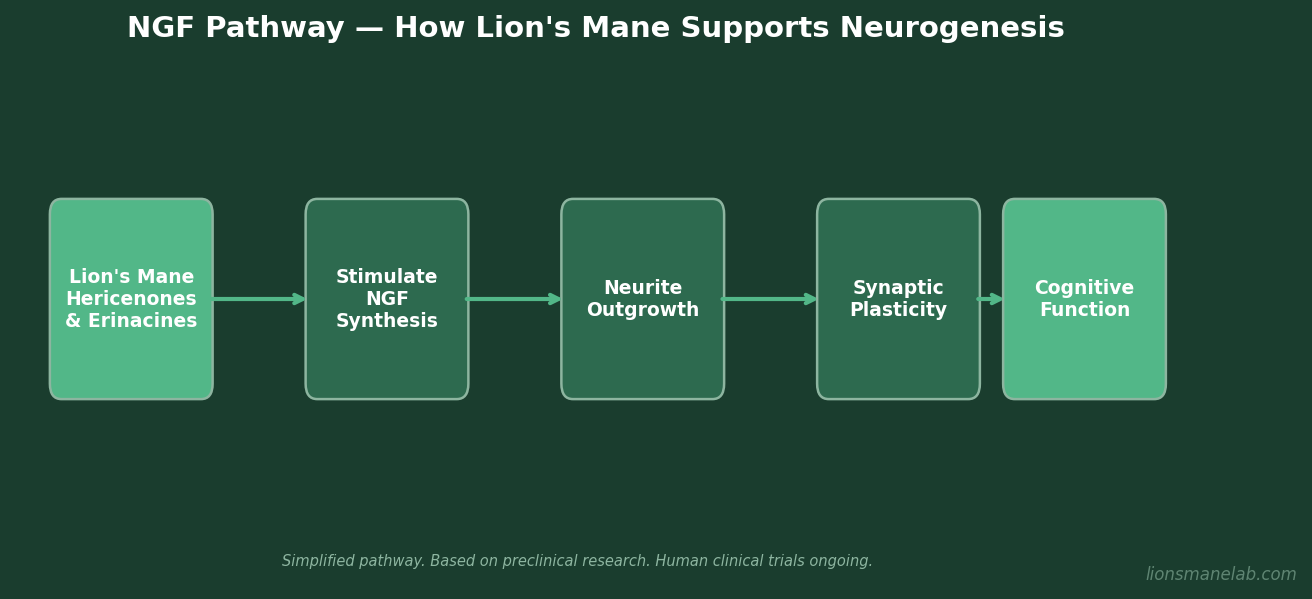
- Neuron survival: NGF prevents programmed cell death (apoptosis) in neurons that would otherwise degenerate
- Axon growth: NGF guides the extension of axons — the long projections neurons use to communicate with each other
- Synaptic plasticity: NGF supports the formation and strengthening of synaptic connections, the physical basis of learning
- Myelin maintenance: NGF contributes to the health of myelin sheaths, the insulating layers that enable rapid signal transmission along nerve fibers
The problem: NGF levels decline with age. This decline is associated with reduced neuroplasticity, impaired memory formation, and the cognitive sluggishness many people notice in their forties and fifties. Researchers have long sought compounds that stimulate the body’s own NGF production rather than relying on external NGF administration, which cannot cross the blood-brain barrier when delivered systemically.
This is what makes lion’s mane remarkable. Two families of compounds in Hericium erinaceus have been shown in laboratory studies to stimulate NGF synthesis from within the brain itself.
Hericenones and Erinacines: Two Pathways to NGF Stimulation
Get Our Free Mushroom Supplement Guide
Lab-tested brands, dosage protocols, and quality markers — delivered free.
No spam. Unsubscribe anytime.
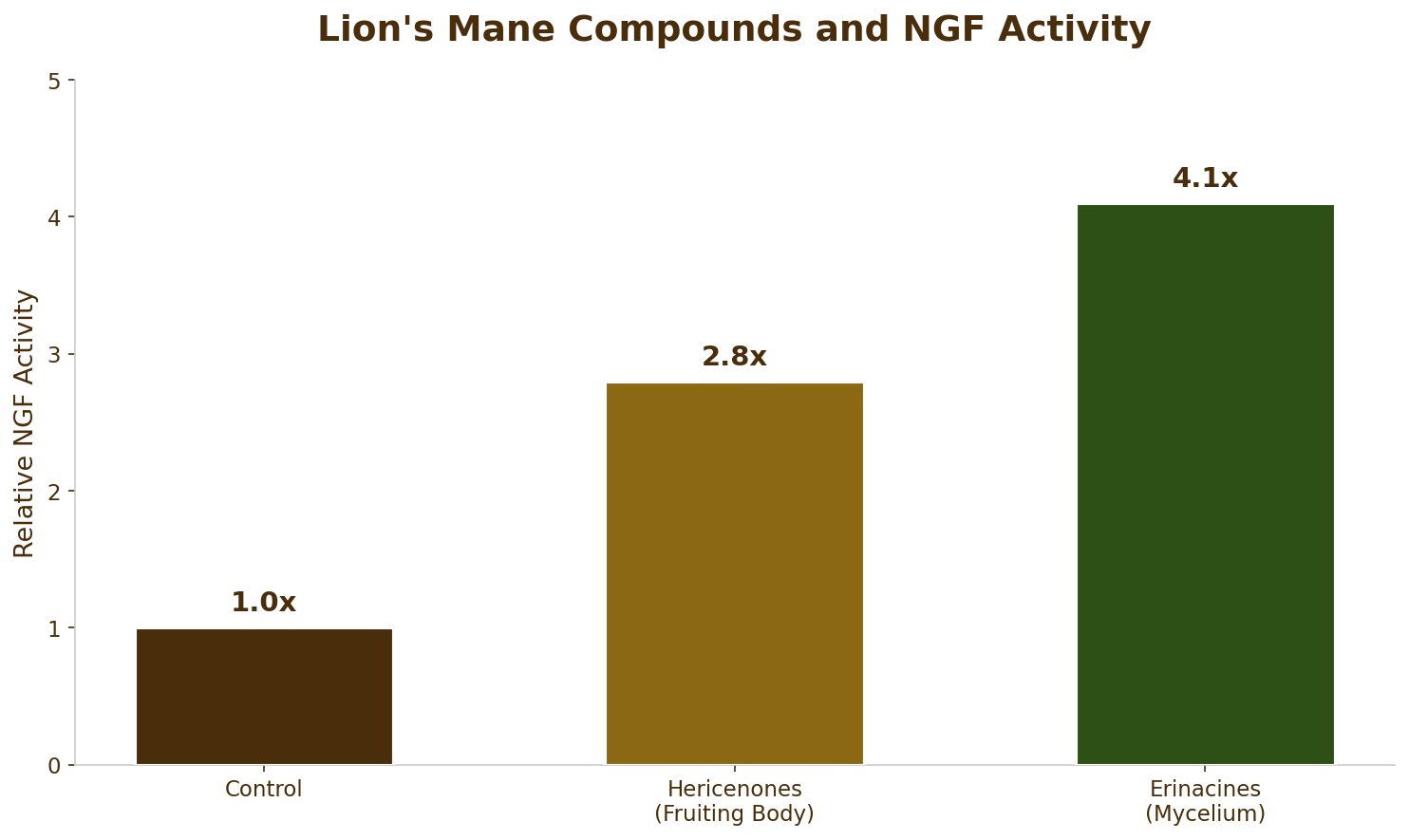
Lion’s mane contains dozens of bioactive compounds, but two families matter most for neurogenesis: hericenones and erinacines. Understanding the distinction is essential for evaluating supplements — and it maps directly onto the fruiting body versus mycelium debate.
Hericenones (Fruiting Body)
Hericenones are aromatic compounds found in the fruiting body — the visible mushroom that looks like a white, cascading waterfall of spines. Research in journals including Phytochemistry and Biomedical Research has demonstrated that hericenones stimulate NGF synthesis in cultured astrocytes (brain cells that support neurons).
The mechanism involves activation of intracellular signaling pathways that upregulate NGF gene expression. In simpler terms, hericenones do not deliver NGF to the brain — they instruct brain cells to produce more of it themselves.
Erinacines (Mycelium)
Erinacines are diterpenoid compounds found primarily in the mycelium — the underground, root-like network of the organism. What makes erinacines especially interesting is that they are small enough to cross the blood-brain barrier, a selective membrane that blocks most large molecules from brain tissue.
Once across the barrier, erinacines stimulate NGF synthesis directly within the central nervous system. Animal studies show that oral erinacine A administration increases NGF levels in the hippocampus and cerebral cortex of mice — the regions most relevant to learning and higher-order cognition.
This dual-compound profile means the full spectrum of lion’s mane benefits may require both hericenones and erinacines — giving both fruiting body and mycelium sources legitimate scientific rationale.
What the Research Actually Shows
Any honest discussion of lion’s mane and neurogenesis must separate what has been demonstrated in laboratory and animal models from what has been confirmed in human trials.
Preclinical Evidence (Strong)
The preclinical case for lion’s mane as an NGF stimulator is robust. Key findings include:
- In vitro NGF stimulation: Multiple studies confirm that both hericenones and erinacines promote NGF synthesis in cell cultures. A 2008 study in the Journal of Agricultural and Food Chemistry found hericenone E stimulated NGF synthesis in astroglial cells at concentrations achievable through oral supplementation.
- Animal neurogenesis: Rodent studies show that oral lion’s mane extract increases hippocampal neurogenesis markers, with treated animals demonstrating improved maze-learning and recognition memory versus controls.
- Myelination support: Animal research suggests erinacines may promote remyelination of nerve fibers, with implications for nerve recovery and signal transmission speed.
- Neuroprotective effects: In models of induced neuronal damage, lion’s mane extracts reduced cell death and preserved cognitive function relative to untreated groups.
Human Evidence (Limited but Growing)
Human clinical trials are fewer and smaller, but early signals are noteworthy:
- Mori et al. (2009): A double-blind, placebo-controlled trial found that older adults with mild cognitive impairment who took lion’s mane extract (250mg tablets, three times daily) for 16 weeks scored significantly higher on cognitive function scales than the placebo group. These improvements reversed after supplementation stopped — suggesting ongoing use may be required.
- Saitsu et al. (2019): A 12-week randomized controlled trial in healthy adults aged 50 and older found improvements in cognitive test scores among those taking lion’s mane versus placebo.
- Emerging research: Several trials investigating lion’s mane for mood support, sleep quality, and cognitive performance are underway, though full peer-reviewed results for many remain pending.
The honest assessment: preclinical evidence strongly supports the NGF-stimulating properties of lion’s mane compounds. Human evidence is encouraging but not yet conclusive. Larger, longer, and more diverse clinical trials are needed. This is a supplement where the mechanistic science is ahead of the clinical proof — warranting optimism tempered by intellectual honesty.
Why NGF Matters Beyond Memory
The conversation around lion’s mane and neurogenesis tends to focus narrowly on memory enhancement. But NGF’s role in the nervous system extends well beyond the hippocampus, and understanding this broader picture helps explain why people report such a wide range of subjective benefits from lion’s mane supplementation.
- Peripheral nerve health: NGF is critical for the maintenance and repair of peripheral nerves — the nerves outside the brain and spinal cord that control sensation and movement. Research suggests that lion’s mane compounds may support peripheral nerve regeneration, which is why some studies have investigated its effects on nerve recovery after injury.
- Gut-brain axis: The enteric nervous system — sometimes called the “second brain” — contains hundreds of millions of neurons that are responsive to NGF. Some researchers hypothesize that lion’s mane’s effects on digestive comfort may be mediated partly through NGF activity in gut neurons.
- Cognitive resilience under stress: NGF supports the survival of neurons under oxidative stress conditions. For individuals experiencing brain fog related to sleep deprivation, chronic stress, or inflammatory states, the neuroprotective dimension of NGF stimulation may be as relevant as the neurogenesis dimension.
This multi-system relevance is part of why lion’s mane has attracted interest from the nootropic community, functional medicine practitioners, and researchers working across different areas of neuroscience.
Choosing a Supplement That Matches the Science
Understanding the NGF pathway changes how you should evaluate lion’s mane supplements. If your goal is to support neurogenesis through NGF stimulation, the active compounds matter — and not all products deliver them equally.
Here are the factors to prioritize based on what the research indicates:
- Fruiting body extracts should specify hericenone content or at minimum use a standardized hot-water extraction process that concentrates these compounds. Look for products with verified beta-glucan content above 25%, which serves as a quality indicator for proper extraction. Our supplement comparison breaks down which brands meet this standard.
- Mycelium extracts must be genuine extracts — not raw mycelium biomass grown on grain. The erinacines that cross the blood-brain barrier are present in properly extracted mycelium, but grain-diluted biomass products may contain mostly starch with minimal active compounds.
- Dual extracts that combine hot-water and alcohol extraction capture both water-soluble and alcohol-soluble compounds, potentially delivering the broadest spectrum of hericenones and erinacines.
- Third-party testing with certificates of analysis (COAs) available on request is non-negotiable for any supplement where compound specificity matters this much.
For those focused specifically on the neurogenesis angle, a quality fruiting body extract from a brand like Real Mushrooms (view product) provides verified hericenone-containing extract with transparent third-party testing. If you want to take the stack approach and combine lion’s mane with complementary nootropic compounds that support overlapping cognitive pathways, Neurohacker Collective’s Qualia Mind (view product) includes lion’s mane alongside other evidence-backed ingredients targeting acetylcholine production, cerebral blood flow, and mitochondrial function — a more comprehensive approach for those who want a single-product protocol grounded in the research. You can explore how this fits into a broader regimen in our guide to building a functional mushroom stack.
The right dosage also matters. Most studies showing cognitive benefits have used between 500mg and 3,000mg per day of concentrated extract, taken consistently over weeks to months. Lion’s mane is not an acute-effect compound — it works through gradual biological processes like NGF upregulation and neurogenesis, which inherently require time.
Frequently Asked Questions
Does lion’s mane directly cause neurogenesis in humans?
The honest answer is that we do not yet have direct evidence of lion’s mane causing neurogenesis in living human brains. Measuring neurogenesis in humans is extraordinarily difficult — it requires either post-mortem tissue analysis or advanced imaging techniques that are still being refined. What we do have is strong preclinical evidence that lion’s mane compounds stimulate NGF production (demonstrated in cell cultures and animal models) and human trial data showing cognitive improvements consistent with enhanced neuroplasticity. The mechanistic pathway from NGF stimulation to neurogenesis is well-established in neuroscience; the specific confirmation that lion’s mane triggers this full chain in human brains is still a gap in the literature.
How long does it take for lion’s mane to affect NGF levels?
Animal studies have detected increased NGF levels in brain tissue within two to four weeks of daily lion’s mane administration. Human cognitive trials have generally used intervention periods of 8 to 16 weeks before measuring outcomes. Most researchers and experienced users suggest a minimum commitment of four weeks of consistent daily use before evaluating subjective effects, with the understanding that NGF-driven neuroplastic changes are gradual, cumulative processes. Individual variation is significant — factors including age, baseline cognitive status, sleep quality, and overall health all influence response timelines.
Is fruiting body or mycelium better for neurogenesis?
Both have legitimate scientific rationale. Fruiting body extracts contain hericenones, which stimulate NGF synthesis. Mycelium extracts contain erinacines, which can cross the blood-brain barrier and stimulate NGF production directly in the central nervous system. For neurogenesis specifically, erinacines may have a theoretical advantage due to their ability to reach brain tissue directly, but this does not mean fruiting body products are ineffective — hericenones also drive NGF production through peripheral pathways. The quality of extraction matters more than the source debate. A poorly extracted mycelium product diluted with grain starch will underperform a well-extracted fruiting body product every time. Read our full analysis in the fruiting body versus mycelium comparison.
Can you take lion’s mane with other nootropics for enhanced neurogenesis?
Many nootropic users combine lion’s mane with complementary compounds. Alpha-GPC, a choline source, supports acetylcholine production — the neurotransmitter system most closely linked to memory and learning — and may work synergistically with the NGF pathway that lion’s mane activates. Bacopa monnieri targets memory consolidation through different mechanisms and, like lion’s mane, requires weeks of consistent use. Rhodiola rosea addresses cognitive fatigue through stress-axis modulation. Stacking these compounds is a common practice in the nootropic community, though formal research on specific combinations remains limited. Consult your healthcare provider before combining supplements, particularly if you take prescription medications.
What are the risks or side effects of using lion’s mane for cognitive support?
Lion’s mane is generally recognized as safe. Side effects reported in clinical trials have been mild and uncommon — primarily digestive discomfort in some individuals during the first few days of use. Allergic reactions are rare but possible, particularly in people with known mushroom allergies. Those taking blood thinners or immunosuppressant medications should consult a physician before supplementing, as some research suggests potential interactions with these drug categories. There is no established toxicity threshold from the existing research, but responsible supplementation means staying within studied dosage ranges (500mg to 3,000mg daily of concentrated extract) and sourcing from brands that provide third-party testing verification.
Conclusion: A Promising Frontier, Not a Finished Story
Lion’s mane mushroom occupies a unique position in the nootropic landscape. It is not a stimulant that masks fatigue. It is not a racetam tweaking receptor dynamics. It is a natural compound that appears to work through the most fundamental mechanism the brain uses to maintain and renew itself — Nerve Growth Factor signaling and the neurogenesis it supports.
The science is genuinely promising. Hericenones and erinacines stimulate NGF production through complementary pathways. Preclinical models consistently show enhanced neuron growth, improved myelination, and neuroprotective effects. Early human trials show cognitive improvements in both impaired and healthy populations. The mechanistic story is coherent and supported by decades of foundational NGF research.
What remains is the work of confirmation: larger human trials, longer intervention periods, more diverse populations, and direct measurement of human neurogenesis markers. Until that work is complete, lion’s mane sits in the category of “strong biological plausibility with early confirmatory evidence” — a category that deserves neither uncritical enthusiasm nor dismissive skepticism.
For those who choose to supplement based on the current evidence, the practical path is clear: choose a well-extracted product with transparent testing, use it consistently at researched dosage levels, and give the biology time to work. The NGF pathway is not a light switch. It is a process — and the research suggests lion’s mane may be one of the most compelling natural tools we have for supporting it.
You may also find helpful: Lion’S Mane And Depression
References
- Mori K, et al. “Nerve growth factor-inducing activity of Hericium erinaceus in 1321N1 human astrocytoma cells.” Biological & Pharmaceutical Bulletin, 2008.
- Lai PL, et al. “Neurotrophic properties of the Lion’s mane medicinal mushroom, Hericium erinaceus: neurite outgrowth stimulation.” International Journal of Medicinal Mushrooms, 2013.
- Lion’s Mane and Nerve Growth Factor — Examine.com Research Summary
- Memorial Sloan Kettering Cancer Center: Lion’s Mane Mushroom