
What to Realistically Expect: Lion’s Mane Side Effects
If you’re researching lion’s mane mushroom (Hericium erinaceus) and want to know what could go wrong before you spend a dime, you’re in the right place. This article won’t sugarcoat the science or dodge the unknowns. Instead, we’ll walk through exactly what the research literature says about side effects, who should exercise caution, and where the gaps in our knowledge actually are.
In This Article
- What to Realistically Expect: Lion’s Mane Side Effects
- The Overall Safety Profile of Lion’s Mane
- Commonly Reported Side Effects
- How to Minimize Digestive Discomfort
- Allergic Reactions: Rare but Real
- Drug Interactions and Medical Cautions
- Blood Thinners and Anticoagulants
- Immunosuppressant Medications
- Diabetes Medications
- Who Should Avoid Lion’s Mane (or Proceed with Extra Caution)
- What About Long-Term Use?
- Product Quality Matters for Safety
- Frequently Asked Questions
- Can lion’s mane cause headaches?
- Is it safe to take lion’s mane every day?
- Does lion’s mane interact with antidepressants or anti-anxiety medications?
- Can lion’s mane cause liver damage?
- What should I do if I experience side effects from lion’s mane?
- The Bottom Line on Lion’s Mane Safety
- References
The short version: lion’s mane has a strong safety profile in the available research, and it holds Generally Recognized as Safe (GRAS) status. But “strong safety profile” is not the same as “zero risk for everyone.” Let’s dig into the details so you can make a genuinely informed decision.
The Overall Safety Profile of Lion’s Mane
Lion’s mane mushroom has been consumed as a food in East Asian cultures for centuries, and its use as a dietary supplement has grown significantly in recent decades. From a regulatory standpoint, lion’s mane holds GRAS status, meaning it is generally considered safe for consumption when used as intended.
In the published research literature, no serious adverse events have been attributed to lion’s mane supplementation at typical dosages. The commonly studied range falls between 500mg and 3,000mg per day, depending on the extract concentration and product format. If you’re trying to figure out where you fall in that range, our lion’s mane dosage guide breaks it down by form and goal.
That said, it’s important to be clear about what “safe in the research” actually means. Most human studies on lion’s mane have been relatively small and short in duration. We have reasonable evidence that standard doses are well tolerated over weeks to months, but we do not have robust long-term safety data spanning years of continuous use. That’s an honest gap worth acknowledging.
Commonly Reported Side Effects
Get Our Free Mushroom Supplement Guide
Lab-tested brands, dosage protocols, and quality markers — delivered free.
No spam. Unsubscribe anytime.
The most frequently reported side effect of lion’s mane supplementation is mild digestive discomfort, particularly during the first few days of use. This can include:
Related: Lion’S Mane And Gut Health
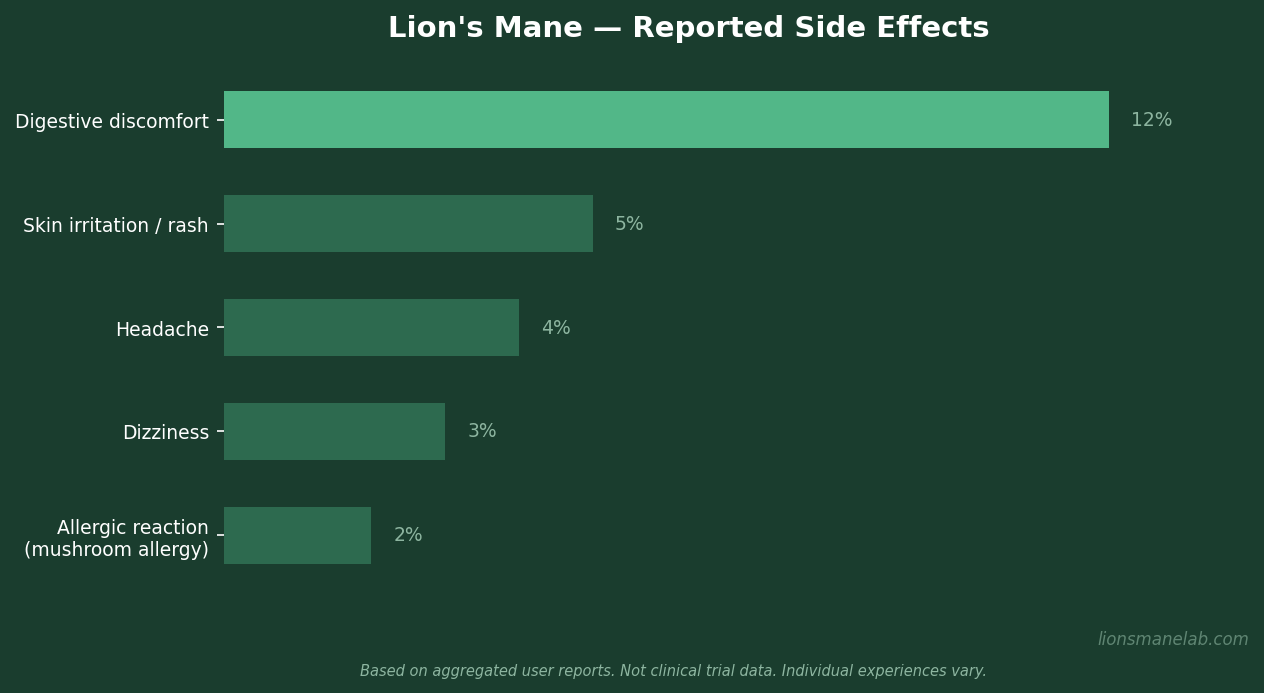
- Bloating or gas — Especially common when starting with a higher dose before the digestive system adjusts.
- Mild stomach upset or nausea — Typically transient and tends to resolve within the first week.
- Changes in bowel habits — Some users report looser stools initially, which usually normalize with continued use.
These effects are consistent with introducing any new mushroom-derived supplement that contains beta-glucans and other bioactive polysaccharides. Your gut microbiome is encountering new prebiotic compounds, and a brief adjustment period is not unusual.
How to Minimize Digestive Discomfort
If you experience stomach upset when starting lion’s mane, consider these approaches:
- Start with a lower dose (250mg–500mg) and gradually increase over one to two weeks.
- Take lion’s mane with food rather than on an empty stomach.
- Split your daily dose into two servings — morning and afternoon — rather than taking it all at once.
- If using powder, mix it into a warm beverage or smoothie rather than taking it dry.
For a deeper look at timing and methods, see our guide on how to take lion’s mane for maximum absorption and comfort.
Allergic Reactions: Rare but Real
Allergic reactions to lion’s mane are uncommon, but they do occur — particularly in individuals with known mushroom allergies. If you have a documented allergy to any species of edible or medicinal mushroom, you should approach lion’s mane with caution and consult your healthcare provider before trying it.
Reported allergic responses in the literature and post-market surveillance have included:
- Skin rash or contact dermatitis
- Itching
- Difficulty breathing (rare, and primarily in individuals with pre-existing mushroom allergies)
If you experience any signs of an allergic reaction — hives, swelling, throat tightness, or difficulty breathing — discontinue use immediately and seek medical attention. For individuals without mushroom allergies, allergic reactions to lion’s mane are exceptionally rare in the available data. But rare does not mean impossible, which is why starting with a small dose on the first day is a sensible precaution.
Drug Interactions and Medical Cautions
This is the section where we need to be especially careful and honest. While lion’s mane is a food-derived supplement and not a pharmaceutical, it does contain bioactive compounds that may interact with certain medications.
Blood Thinners and Anticoagulants
Research suggests that lion’s mane may have mild antiplatelet properties, meaning it could theoretically affect blood clotting. If you are taking blood-thinning medications such as warfarin, heparin, aspirin (at therapeutic doses), or other anticoagulants, you should consult your doctor before adding lion’s mane to your routine.
This does not mean lion’s mane will definitely cause a problem. It means the potential interaction has been identified in research, and a qualified healthcare provider should assess your specific situation. The risk may be low, but it is not zero.
Immunosuppressant Medications
Lion’s mane contains beta-glucans that may have immune-modulating properties. Research suggests these compounds may support immune system activity, which could theoretically interfere with immunosuppressant medications prescribed after organ transplants, for autoimmune conditions, or other immune-related situations.
If you take any medication intended to suppress or regulate your immune system, talk to your doctor before using lion’s mane. This is a non-negotiable precaution — the potential consequences of an unintended immune response in these contexts are serious.
Diabetes Medications
Some animal studies suggest lion’s mane may influence blood sugar levels. While this is far from established in humans, individuals taking insulin or oral diabetes medications should be aware of this possibility and monitor their blood sugar more closely if they choose to supplement. A conversation with your healthcare provider is the responsible first step.
Who Should Avoid Lion’s Mane (or Proceed with Extra Caution)
Based on the current body of research and established safety principles, the following groups should either avoid lion’s mane or only use it under direct medical supervision:
- People with mushroom allergies — The risk of allergic reaction is meaningfully higher in this population.
- People on blood-thinning medications — Due to the mild antiplatelet properties observed in research.
- People on immunosuppressants — Due to the immune-modulating properties of beta-glucans.
- Pregnant or nursing women — There is insufficient safety data in this population. The honest answer is: we simply do not know enough to give a confident green light. When in doubt during pregnancy or breastfeeding, the conservative choice is to wait.
- People scheduled for surgery — Given the theoretical antiplatelet effects, most practitioners recommend discontinuing lion’s mane at least two weeks before a planned surgical procedure. Inform your surgeon about all supplements you take.
If you don’t fall into any of these categories and you’re generally healthy, the existing evidence suggests lion’s mane is well tolerated. But everyone’s biology is different, and individual results vary. Starting low and building gradually is always wise.
What About Long-Term Use?
This is where intellectual honesty matters most. We do not have extensive long-term safety studies on lion’s mane supplementation in humans. Most clinical research spans four to sixteen weeks. Observational data from populations with long histories of dietary consumption is reassuring, but dietary use and concentrated extract supplementation are not identical.
What we can say is:
- No serious adverse events have been reported in the existing research literature at standard doses.
- The GRAS status reflects a generally favorable safety assessment.
- Centuries of use as a culinary mushroom provide some baseline reassurance, though this does not substitute for controlled studies.
- The active compounds — hericenones and erinacines — have not shown toxicity in the animal models studied to date.
If you plan to use lion’s mane consistently over many months, periodic check-ins with your healthcare provider are a reasonable practice. This is true for any long-term supplement use, not a specific red flag for lion’s mane.
To understand what these compounds actually do and why people take lion’s mane in the first place, our complete guide to lion’s mane benefits covers the research in detail.
Product Quality Matters for Safety
One factor that doesn’t get discussed enough in side effect articles is product quality. Not all lion’s mane supplements are equal, and some safety concerns can actually stem from poor manufacturing practices rather than lion’s mane itself.
When choosing a lion’s mane supplement, look for products that are:
- Third-party tested with a Certificate of Analysis (COA) available
- Manufactured in a cGMP-certified facility
- Free of fillers, artificial additives, and undisclosed grain substrates
- Clear about whether they use fruiting body, mycelium, or both (this affects the active compound profile — our fruiting body vs. mycelium comparison explains the difference)
A high-quality product like Real Mushrooms ([AFFILIATE LINK PLACEHOLDER: REAL MUSHROOMS]), which uses 100% fruiting body with verified beta-glucan content and third-party testing, reduces the risk of contaminant-related issues that can sometimes be mistaken for side effects of the mushroom itself.
If you want a full breakdown of what separates trustworthy products from the rest, check our best lion’s mane supplement guide.
Frequently Asked Questions
Can lion’s mane cause headaches?
Headaches are not a commonly reported side effect of lion’s mane in the research literature. Occasional anecdotal reports exist online, but headaches have not been established as a consistent or expected effect. If you experience persistent headaches after starting lion’s mane, discontinue use and consult your healthcare provider — and consider whether other factors like dehydration or caffeine changes could be contributing.
Is it safe to take lion’s mane every day?
Based on the available research, daily supplementation within the typical range of 500mg to 3,000mg appears to be well tolerated by most healthy adults. Most studies on lion’s mane and cognitive function involve daily use over several weeks, consistent with the understanding that its active compounds build up gradually. Long-term studies spanning years are limited, so periodic check-ins with your doctor are a reasonable practice.
Does lion’s mane interact with antidepressants or anti-anxiety medications?
There is currently no established evidence of direct interactions between lion’s mane and SSRI antidepressants, benzodiazepines, or other common psychiatric medications. However, research on this specific question is limited. If you take any prescription medication for mental health, consult your prescribing physician before adding lion’s mane to your regimen.
Can lion’s mane cause liver damage?
No evidence of hepatotoxicity (liver damage) from lion’s mane has been reported in the research literature at standard doses. Some animal studies have investigated lion’s mane for potential liver-protective properties, though this research is preliminary. If you have a pre-existing liver condition, consult your doctor before taking any new supplement.
What should I do if I experience side effects from lion’s mane?
If you experience mild digestive discomfort, try reducing your dose and taking it with food. This resolves the issue for most people. If symptoms persist beyond a week, or if you experience anything more concerning — skin rash, swelling, difficulty breathing, or unusual bruising — stop taking lion’s mane immediately and contact your healthcare provider.
The Bottom Line on Lion’s Mane Safety
Lion’s mane mushroom has one of the more reassuring safety profiles among popular nootropic and functional mushroom supplements. It carries GRAS status, has no documented serious adverse events in the research literature at standard doses, and has been consumed as a food for centuries in East Asian cultures.
The most realistic thing to expect if you start supplementing is either nothing noticeable on the side-effect front, or mild, temporary digestive adjustment that resolves within the first week. The more important cautions — blood thinners, immunosuppressants, pregnancy — affect specific populations and are best managed with a direct conversation with your doctor.
What we don’t yet have is extensive long-term data in humans. That’s not a reason to avoid lion’s mane, but it is a reason to be a thoughtful consumer: choose quality products, start with conservative doses, pay attention to how your body responds, and keep your healthcare provider informed.
If you’ve read this far and feel comfortable with the safety picture, the next logical step is understanding whether lion’s mane might actually be worth taking for your specific goals. Our guide to lion’s mane for brain fog is a practical starting point if cognitive clarity is what brought you here.
References
- Friedman M. “Chemistry, Nutrition, and Health-Promoting Properties of Hericium erinaceus (Lion’s Mane) Mushroom Fruiting Bodies and Mycelia and Their Bioactive Compounds.” Journal of Agricultural and Food Chemistry, 2015.
- Nagano M, et al. “Reduction of depression and anxiety by 4 weeks Hericium erinaceus intake.” Biomedical Research, 2010.
- Memorial Sloan Kettering Cancer Center: Lion’s Mane Mushroom Safety Profile
- WebMD: Hericium Erinaceus (Lion’s Mane) — Side Effects and Safety