Two Popular Nootropics, Two Very Different Approaches
If you spend any time researching cognitive enhancement, two names keep showing up: lion’s mane mushroom and Alpha Brain by Onnit. Both are marketed to people who want sharper thinking, better memory, and more mental clarity. But despite landing on the same “nootropics” shelf, they work through fundamentally different mechanisms — and understanding those differences is the key to choosing the right tool for your goals.
In This Article
- Two Popular Nootropics, Two Very Different Approaches
- How Lion’s Mane Works: The Long Game for Brain Health
- How Alpha Brain Works: Broader Nootropic Support
- Head-to-Head: Key Differences That Matter
- Mechanism of Action
- Time to Effect
- Ingredient Transparency
- Safety Profile
- Cost Comparison
- The Synergy Argument: Why Using Both May Make Sense
- Who Should Choose Which (or Both)
- Frequently Asked Questions
- Can I take lion’s mane and Alpha Brain at the same time?
- How long does it take to notice results from each?
- Is Alpha Brain just a more expensive version of lion’s mane?
- Which one is better for brain fog?
- Are there any side effects I should know about?
- The Bottom Line
- References
Related: Ashwagandha And Lion’S Mane Stack
Lion’s mane (Hericium erinaceus) is a functional mushroom with a growing body of modern research behind it. Alpha Brain is a nootropic blend combining Alpha-GPC, Bacopa Monnieri, Cat’s Claw, and Huperzine A — designed to support focus, memory, and processing speed.
Here is the thing most comparison articles get wrong: these are not competitors. They address different timelines, different pathways, and different aspects of cognitive performance. This guide breaks down how each one works, what to expect, and whether stacking them together makes sense.
How Lion’s Mane Works: The Long Game for Brain Health
Lion’s mane stands apart from most nootropics because it does not simply tweak neurotransmitter levels. Its primary mechanism involves stimulating the production of Nerve Growth Factor (NGF), a protein critical for the growth, maintenance, and survival of neurons. The two key compounds responsible are hericenones (found in the fruiting body) and erinacines (found in the mycelium).
Research suggests that this NGF-stimulating activity may support neuroplasticity — the brain’s ability to form new neural connections and adapt over time. This is a slow-build process that most users in available studies report noticing after 2 to 4 weeks of consistent daily use, with benefits appearing to compound over months.
What makes lion’s mane particularly interesting for long-term cognitive support is the breadth of its potential effects:
- NGF stimulation — may support the growth and repair of nerve cells
- Neuroplasticity — research suggests it may help the brain form new connections more readily
- Immune modulation — beta-glucans in lion’s mane support healthy immune function
- Neuroprotective properties — some studies indicate it may help protect existing neurons from oxidative stress
- Mood support — preliminary research suggests possible benefits for emotional well-being, though more human trials are needed
The typical dosage range is 500mg to 3,000mg per day, depending on extract concentration and form. Quality matters enormously here — a high-quality lion’s mane supplement using fruiting body extract with verified beta-glucan content will outperform a cheap mycelium-on-grain product every time. Brands like Real Mushrooms (check current pricing) set the standard for third-party tested, fruiting body extracts with verified potency.
How Alpha Brain Works: Broader Nootropic Support
Get Our Free Mushroom Supplement Guide
Lab-tested brands, dosage protocols, and quality markers — delivered free.
No spam. Unsubscribe anytime.
Alpha Brain takes a different approach entirely. Rather than targeting a single growth factor pathway, it combines multiple ingredients that work across several neurotransmitter systems simultaneously. Here is what is inside and what each component does:
- Alpha-GPC — a choline compound that serves as a precursor to acetylcholine, a neurotransmitter critical for memory, learning, and attention
- Bacopa Monnieri — an adaptogenic herb with research supporting memory consolidation and information retention, though it also requires consistent use over weeks
- Cat’s Claw (AC-11) — a proprietary extract that Onnit claims supports DNA repair and cellular integrity
- Huperzine A — an acetylcholinesterase inhibitor that may help maintain higher acetylcholine levels by slowing its breakdown
- L-Theanine — an amino acid found in tea that promotes calm alertness without sedation
- Oat Straw Extract — traditionally used to support cognitive performance under stress
The mechanism is largely neurotransmitter-focused. By increasing acetylcholine availability (Alpha-GPC provides the raw material, Huperzine A prevents breakdown), Alpha Brain aims to support the chemical environment your brain needs for sharp thinking. Some users report noticeable effects within the first few uses, though individual results vary.
Onnit has invested in clinical research on Alpha Brain. A 2016 randomized, double-blind, placebo-controlled trial published in the Journal of the International Society of Sports Nutrition found improvements in verbal memory and executive function among healthy adults. Independent replication would strengthen the evidence base. You can try Alpha Brain for yourself (see latest Onnit pricing).
Head-to-Head: Key Differences That Matter
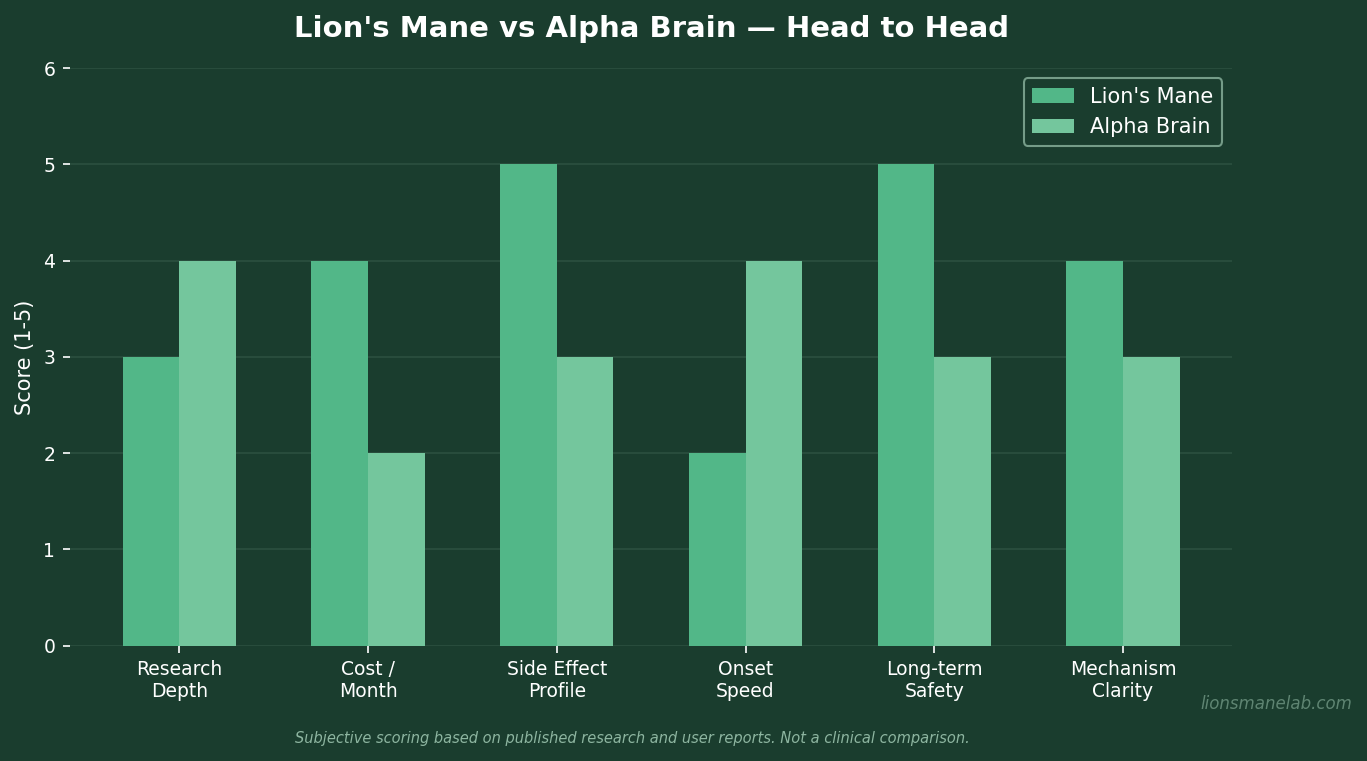
Understanding where lion’s mane and Alpha Brain differ helps you match each one to your specific goals. Here is how they compare across the dimensions that matter most:
Mechanism of Action
Lion’s mane works upstream by stimulating NGF production — essentially encouraging your brain to build and maintain its own hardware. Alpha Brain works downstream by optimizing neurotransmitter levels — making sure the existing hardware has the chemical fuel it needs to perform. These are complementary, not competing, pathways.
Time to Effect
Alpha Brain may produce noticeable effects relatively quickly for some users, particularly improvements in focus and verbal fluency. Lion’s mane is a slow-build supplement — most people need 2 to 4 weeks of consistent daily use before noticing changes, with benefits deepening over months. If you need something for a presentation tomorrow, lion’s mane alone is not the answer.
Ingredient Transparency
Alpha Brain uses a proprietary blend, meaning you can see the total weight of each blend category but not the exact dose of every individual ingredient. Lion’s mane supplements — at least the reputable ones — tend to be straightforward: a specific amount of extract with a stated beta-glucan percentage. What you see is what you get.
Safety Profile
Lion’s mane is generally recognized as safe with a long history as both food and supplement. Rare allergic reactions have been reported, and anyone on blood thinners or immunosuppressants should consult their doctor. Alpha Brain is also generally well-tolerated, though Huperzine A should not be combined with certain medications without medical guidance. Always consult a qualified healthcare provider before starting any new supplement.
Cost Comparison
Alpha Brain runs approximately $35 to $80 per month depending on format and quantity. A quality lion’s mane extract typically costs $25 to $50 per month. If stacking both, expect a combined investment of roughly $60 to $100 per month.
The Synergy Argument: Why Using Both May Make Sense
Here is where this comparison gets genuinely useful. Lion’s mane and Alpha Brain are not just “different” — they may actually be synergistic. The reason comes down to how their mechanisms interact.
Lion’s mane stimulates NGF production, supporting the growth of new neural connections. But new neurons and connections need neurotransmitters to function. That is where Alpha-GPC (a core ingredient in Alpha Brain) becomes relevant — it is a choline source that supports acetylcholine production, the very neurotransmitter those new neural pathways need to fire effectively.
Think of it this way: lion’s mane helps build the roads, and the acetylcholine supported by Alpha-GPC is the traffic that flows along them. Building new roads without traffic is wasted infrastructure. Traffic without roads leads to congestion. The combination addresses both sides of the equation.
Alpha-GPC is synergistic with the NGF pathway — a choline source supports acetylcholine production in tandem with the nerve growth lion’s mane may encourage. Some nootropic enthusiasts build a functional mushroom stack that includes lion’s mane as the foundation and adds targeted nootropic compounds on top.
A practical approach might look like this:
- Morning: Lion’s mane extract (1,000mg with breakfast) for ongoing neuroplasticity support
- Before demanding cognitive work: Alpha Brain (2 capsules) for acute neurotransmitter support
- Consistent daily use of lion’s mane while using Alpha Brain as needed for peak performance days
This is not medical advice — consult your healthcare provider before combining supplements, especially if you take any medications.
Who Should Choose Which (or Both)
Your ideal choice depends on what you are trying to solve. Here is a practical decision framework:
Lion’s mane may be the better fit if you:
- Are focused on long-term brain health and neuroprotection
- Experience persistent brain fog and want to address root causes over time
- Prefer single-ingredient supplements where you control the dose
- Want a natural, food-derived nootropic with a long safety track record
- Are building a foundation for a broader cognitive support regimen
Alpha Brain may be the better fit if you:
- Need broader nootropic support across multiple neurotransmitter systems
- Want the convenience of a single all-in-one formula
- Are looking for more immediate support for focus and verbal fluency
- Already have a solid health foundation and want performance optimization
Consider using both if you:
- Want comprehensive cognitive support covering both short-term performance and long-term brain health
- Are willing to invest in a more complete nootropic regimen
- Understand that the NGF pathway (lion’s mane) and acetylcholine pathway (Alpha Brain) are complementary
- Have confirmed with your healthcare provider that the combination is appropriate for you
For lion’s mane specifically, quality makes an outsized difference. A properly extracted fruiting body supplement with verified beta-glucan content is essential. Real Mushrooms (view their lion’s mane capsules) is a solid option for verified potency, while Onnit’s Alpha Brain (check pricing here) remains the most researched all-in-one nootropic blend on the market.
Frequently Asked Questions
Can I take lion’s mane and Alpha Brain at the same time?
Many nootropic users combine them without reported issues, and their mechanisms are complementary rather than conflicting. Lion’s mane supports NGF production while Alpha Brain targets neurotransmitter optimization. That said, always consult your healthcare provider before combining supplements, especially if you take prescription medications — Huperzine A in Alpha Brain interacts with certain drugs.
How long does it take to notice results from each?
The timelines are quite different. Some Alpha Brain users report noticing changes in focus and verbal fluency within the first few days of use, though individual responses vary significantly. Lion’s mane is a slow-build supplement — most users in available studies report noticeable effects after 2 to 4 weeks of consistent daily use, with benefits appearing to deepen over 2 to 3 months. The full range of lion’s mane benefits tends to unfold gradually as NGF-supported neuroplasticity takes effect.
Is Alpha Brain just a more expensive version of lion’s mane?
Not at all — they are fundamentally different products. Alpha Brain is a multi-ingredient blend targeting neurotransmitter systems (primarily acetylcholine). Lion’s mane is a single-species mushroom extract that works through NGF stimulation. Comparing them is like comparing a multivitamin to vitamin C — one is a broad-spectrum formula, the other is a targeted compound with a specific mechanism. The choice should be based on your goals, not just cost.
Which one is better for brain fog?
It depends on the cause. Lion’s mane may be better suited for brain fog stemming from neuroinflammation or poor neural connectivity, since it works at the structural level through NGF support. Alpha Brain may help more with brain fog related to neurotransmitter imbalances, since it directly supports acetylcholine pathways. If your brain fog is persistent, consider how to take lion’s mane consistently as a foundation while using Alpha Brain for additional acute support.
Are there any side effects I should know about?
Lion’s mane is generally well-tolerated. Rare side effects include mild digestive discomfort and allergic reactions in people sensitive to mushrooms. Alpha Brain side effects may include headaches or nausea in some users, often attributed to the choline content or Huperzine A. Starting with a lower dose and increasing gradually is sensible. Discontinue use and consult your doctor if you experience adverse reactions.
The Bottom Line
The lion’s mane versus Alpha Brain debate is a false dichotomy. These supplements serve different purposes through different mechanisms, and framing them as competitors misses the point entirely.
Lion’s mane is a long-term investment in brain infrastructure — a natural mushroom extract that may support neuroplasticity and NGF production over weeks and months of consistent use. Alpha Brain is a broader nootropic formula designed to optimize neurotransmitter function, with some users experiencing more immediate effects on focus and memory.
For people serious about cognitive performance, the question is not “which one” but “how do I use both intelligently.” Lion’s mane as a daily foundation, with Alpha Brain added for comprehensive neurotransmitter support, covers both the structural and chemical sides of brain function.
Start with a quality lion’s mane supplement, give it at least a month of consistent use, and then evaluate whether adding Alpha Brain fills any remaining gaps. Your brain deserves more than a one-dimensional approach.
References
- Mori K, et al. “Improving effects of the mushroom Yamabushitake (Hericium erinaceus) on mild cognitive impairment: a double-blind placebo-controlled clinical trial.” Phytotherapy Research, 2009.
- Mori K, et al. “Nerve growth factor-inducing activity of Hericium erinaceus in 1321N1 human astrocytoma cells.” Biological & Pharmaceutical Bulletin, 2008.
- Lion’s Mane — Examine.com Evidence-Based Research Summary
- WebMD: Hericium Erinaceus (Lion’s Mane) — Overview and Research